The government's EU leaflet: alternatives to membership
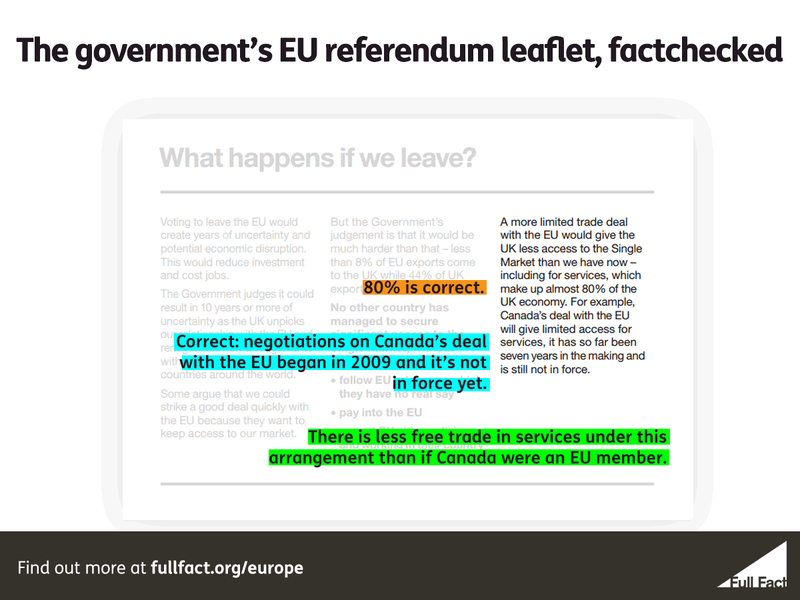
“A more limited trade deal with the EU would give the UK less access to the single market than we have now—including for services, which make up almost 80% of the UK economy. For example, Canada’s deal with the EU will give limited access for services, it has so far been 7 years in the making and is still not in force.”
It’s correct that the UK economy is around 80% services, so being able to sell services to the EU if we left would be particularly important to the UK.
Negotiations on Canada’s deal with the EU were announced in May 2009, although the EU says they were completed in 2014.
Join 75,000 newsletter subscribers who trust us to check the facts
Sign up to get weekly updates on politics, immigration, health and more.
Subscribe to weekly email newsletters from Full Fact for updates on politics, immigration, health and more. Our fact checks are free to read but not to produce, so you will also get occasional emails about fundraising and other ways you can help. You can unsubscribe at any time. For more information about how we use your data see our Privacy Policy.
It’s correct that the deal hasn’t been signed or brought into force yet, as there have been legal technicalities to iron out, and it still needs to be approved by the EU’s Council, Parliament and perhaps each individual member country. The think tank Open Europe has looked at how long free trade deals typically take from start to finish.
The deal is perceived to allow for fairly free trade in goods, but less free trade in services than if Canada were an EU member. There are restrictions on airlines, TV and some areas of financial services.
Not being in the single market or having a Canada-style trade deal after leaving doesn’t mean that trade with the EU dries up entirely. The UK would fall back on World Trade Organisation rules.