How much is the UK spending on the Chagos deal?
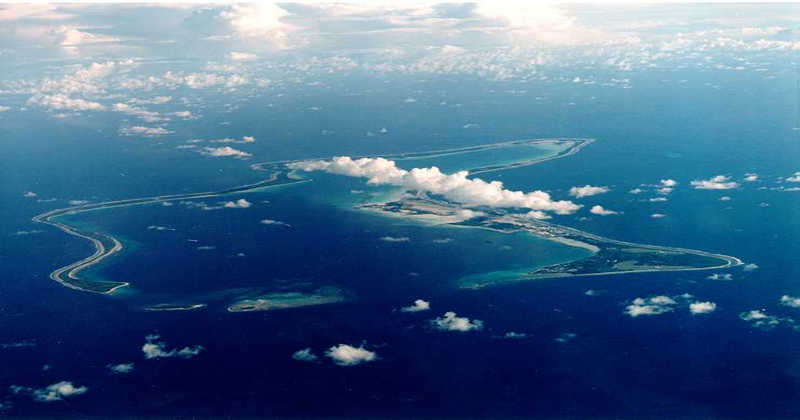

The UK government’s decision to hand sovereignty over the Chagos Islands to Mauritius has been fiercely debated in recent months, with the cost of the deal subject to particular scrutiny.
The Conservatives have repeatedly claimed that the “true cost” of the deal, which will implement the transfer of sovereignty and see the UK lease the island of Diego Garcia—home to a joint UK-US military base—from Mauritius for a period of 99 years, is £35 billion.
But this is seemingly at odds with the figure quoted by the government, which says the agreement will cost £3.4 billion over the 99-year period.
These figures are calculated using different methodologies.
The £35 billion refers to the nominal cost of the deal (the sum of the amount the government expects to pay each year, over the 99-year period of the lease, in cash terms).
The £3.4 billion figure, meanwhile, expresses the scale of the deal in today’s terms, by taking into account the impact of inflation, as well something called the Social Time Preference Rate (STPR), which is based on the principle that society values present spending more highly than future spending.
The Institute for Fiscal Studies (IFS) told Full Fact that both figures are legitimate ways to express the costs associated with the deal, though the government’s figure is more useful for giving a sense of scale given the long-term nature of the agreement.
At the time of writing, legislation to confirm the agreement in UK law is progressing through Parliament, although in January a planned debate on the bill in the House of Lords was withdrawn after the Conservatives tabled a so-called wrecking amendment.
US President Donald Trump, having previously criticised the deal, this week appeared to signal his approval, but noted that the US would “retain the right to militarily secure and reinforce the American presence in Diego Garcia” should it come under threat.
Join 72,953 people who trust us to check the facts
Sign up to get weekly updates on politics, immigration, health and more.
Subscribe to weekly email newsletters from Full Fact for updates on politics, immigration, health and more. Our fact checks are free to read but not to produce, so you will also get occasional emails about fundraising and other ways you can help. You can unsubscribe at any time. For more information about how we use your data see our Privacy Policy.
Where the different figures come from
As part of the agreement over the Chagos Islands, the UK has agreed to pay Mauritius:
- A fixed sum of £165 million per year in the first three years of the agreement.
- A fixed sum of £120 million per year in the following ten years.
- The equivalent of £120 million per year (in today’s prices) for the remaining 86 years of the agreement, with this sum increasing in line with inflation each year.
- A one-off £40 million payment to capitalise a trust fund for Chagossians, to be made in the second year of the deal.
- A fixed sum of £45 million per year for a 25-year period, beginning in year four of the agreement, to fund development projects undertaken by Mauritius.
In August 2025 the Conservative party obtained figures produced by the Government Actuary’s Department which estimate the cash terms payments each year, after inflation has been factored in. These put the total nominal sum at £34.7 billion.
The £3.4 billion figure used by the government, meanwhile, is the estimated ‘net present value’ of the deal—the total cost in 2025/26 prices, further discounted using the STPR.
Using the Office for Budget Responsibility’s GDP deflator the government estimates that the average annual cost of the deal in 2025/26 prices is £101 million—a total of just over £10 billion across the 99 years.
To produce its £3.4 billion estimate, the government has then applied a STPR to the real-terms figures. This amounts to 3.5% over the first 30 years of the year, 3% for years 31-75, and 2.5% for the remaining years.
This reflects the fact that although the payments due in the later years of the treaty will actually be in nominal terms in excess of £600 million, these payments would still be worth less than £100 million in today’s money, after accounting for inflation.
What’s the ‘true’ cost of the deal?
Ben Zaranko, associate director at the Institute for Fiscal Studies, told Full Fact that both figures used are “technically correct”, adding: “The figure used by the Conservatives does accurately reflect the cash that will change hands over the lifetime of the deal. The Treasury figure is an accurate reflection of the net value of the stream of payments in today's terms, under the government's methodology, which is more useful if we want to compare the lifetime cost of the deal to alternative things we could spend on instead.
“Neither is unambiguously right or wrong: it depends on the question at hand. In general, though, for long-term agreements like this, some form of inflation adjustment and discounting is appropriate, and the Treasury figure is probably more useful for giving a sense of scale.”
This view of the two figures was echoed by Julian Jessop, an economist who has been critical of the deal, who in a blog published in May 2025 wrote that in his opinion “both are correct but [the net present value method] is better”.
The Treasury told Full Fact in June 2025 that both figures represent legitimate ways to calculate the cost of the Chagos deal, but said the lower figure is more appropriate due to the long-term nature of the deal. (When we asked it about the costs again in February 2026, it referred us to the Foreign, Commonwealth & Development Office—we’ve asked the FCDO for the government’s latest position and will update this fact check if we hear back.)
It’s also worth noting that although the Conservatives have accused Labour of using an “accountancy trick” to reduce the headline costs, the same discount rates have been in use since 2003. According to a 2021 written answer to Parliament from then-Chief Secretary to the Treasury Steve Barclay MP, the discount rates were used by all government departments in the formulation of policy appraisal during the last Conservative government.
That being said, the government has sometimes chosen to avoid this methodology when talking about future investments, even though the same discounts could be applied. For example, when the government talks about plans to invest £22 billion in carbon capture over the next 25 years, the “net present value” of the sum invested will be significantly lower.
It’s worth noting that the STPR discount rates used by the government and applied to the Chagos deal are currently under review.
Incorrect or misleading claims?
Both Labour and the Conservatives have criticised each other’s use of the respective figures.
In May 2025, Conservative shadow defence minister James Cartlidge MP wrote to the UK Statistics Authority (UKSA) suggesting that the Prime Minister’s use of the £3.4 billion figure was “inaccurate” and could mislead the public. This followed Mr Starmer attempting to explain the figure during a press conference, where he referred to it as the “net cost” of the treaty.
In its reply the UKSA agreed that the use of the phrase “net cost” failed to make it clear that a discounting method had been used in the calculation, but noted that a full explanation had been provided in the explanatory memorandum and welcomed the fact the information was made public at the time.
We’ve approached Mr Cartlidge for comment.
Meanwhile, defence minister Luke Pollard MP said in a written parliamentary answer last November that the £35 billion figure used by the Conservatives was “incorrect”.
In reality, neither figure is “incorrect” as such, and this is a point that has been acknowledged by the Treasury—rather the Treasury argues that the lower figure is a better representation of the costs associated with the deal in today’s money.
Asked about Mr Pollard’s comment, the Ministry of Defence told Full Fact that while the £35 billion figure was accurate for the nominal cost of the deal, it believed the £3.4 billion figure represents the real cost of the deal.