Council reports reveal scale of Labour’s pothole challenge
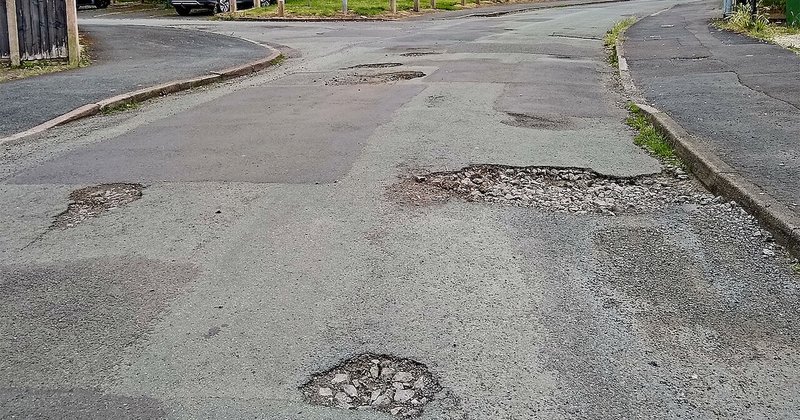

Labour is likely to struggle to deliver on its pledge to fix a million more potholes each year, with early combined estimates from 85 councils projecting no overall increase in repairs in 2025/26, a major new Full Fact investigation reveals.
In its 2024 manifesto, Labour promised to fix “an additional one million potholes in England in each year of the next parliament”.
Yet our analysis of the figures in 154 transparency reports from local highway authorities across England lays bare the scale of that challenge.
The 149 councils which provided usable data for 2024/25, either in their report or via their press office, said around 1.85 million potholes were filled in that year. That suggests at least 2.85 million potholes would need to be repaired in 2025/26 to fulfill Labour’s pledge this year—a 54% increase.
Data from the 146 councils which provided comparable figures shows that the total number of potholes they fixed fell in 2024/25, down 3.5% on the previous year.
And early estimates from 85 councils suggest the total number of potholes they will fill in 2025/26 will be broadly flat—raising doubts about how achievable Labour’s pledge is, in the short term at least.
Our investigation also found huge variation in the way councils record repairs across the country—so it’s important to note that any national estimates for the number of potholes repaired may be uncertain, and direct comparisons between different areas could be unreliable.
Earlier this month the government published a new rating system measuring local highways authorities’ progress on repairing potholes. The 154 local highway authorities were rated green, amber or red based on the condition of their roads and how well they have been judged to use government funds, though the government did not publish any aggregated figures from the reports showing the total number of potholes fixed or projected to be fixed.
It’s worth noting that council budgets for 2024/25 were set before Labour came into office in July 2024, and that Labour was only in office for nine months of the 2024/25 financial year.
We contacted the Department for Transport for comment but did not receive a response.
Join 73,000 newsletter subscribers who trust us to check the facts
Sign up to get weekly updates on politics, immigration, health and more.
Subscribe to weekly email newsletters from Full Fact for updates on politics, immigration, health and more. Our fact checks are free to read but not to produce, so you will also get occasional emails about fundraising and other ways you can help. You can unsubscribe at any time. For more information about how we use your data see our Privacy Policy.
What action has Labour taken on potholes?
We’ve written in detail about the government’s potholes pledge and what’s been done to deliver it on our Government Tracker—we’re now rating the pledge as ‘Appears off track’, based on the findings of this investigation.
In December 2024, the government announced additional funding to help councils in England fix more potholes, in a press release headlined “Seven million more potholes to be filled next year”.
The government told English local authorities in March 2025 that 25% of the extra £500 million in local road maintenance funding it had announced would be dependent on the production of a report by the end of June 2025 detailing the state of their road networks. The government’s template for this report asked for the number of potholes filled in by the local authority over the last five years.
In November’s Budget, the government said it would commit over £2 billion annually by 2029/30 for local authorities to “repair, renew and fix potholes on their roads”, and that this funding was “enough to fill millions of potholes each year, enabling the government to exceed its commitment to fix an additional one million potholes per year”.
How many potholes were fixed in 2024/25?
As we’ve written before, the lack of reliable comparable national potholes data makes any estimates of the scale of the problem across England uncertain. But the reports published by local highway authorities last year can tell us about trends in pothole repairs in different areas, even if comparisons can’t be reliably made between specific authorities because they may count potholes in different ways.
We checked all 154 of the reports from councils and Transport for London (TfL, the highway authority for a number of busy cross-borough roads in London) for data on the number of potholes fixed in recent years, and estimates of how many might be fixed in 2025/26.
Overall, the 149 councils which provided usable data for 2024/25 said 1.85 million potholes were filled that year.
While not every local authority produced figures for each of the last five financial years (2020/21 to 2024/25) Full Fact found 146 local authorities had either published comparable estimates for at least the last two financial years, or provided us with them when we asked. Using only this subset allows for a like-for-like comparison, and shows that in 2024/25 the 146 authorities filled in an estimated 1.76 million potholes—around 64,000 (3.5%) fewer than the previous year.
Previously, a 2025 report by the Asphalt Industry Alliance estimated 1.9 million potholes would be filled in across England and Wales in 2024/25.
Will Labour meet its pledge to fill a million more potholes?
We won’t have a reliable picture of what’s happened in the current financial year (2025/26) until councils publish their next transparency reports. But the government did ask local authorities to produce a rough estimate for how many potholes they would fill in 2025/26 in their 2025 reports.
Full Fact could only find 85 that had done so. Those 85 councils expect to between them fill in roughly the same amount of potholes (around 813,000) in 2025/26 as they did in 2024/25 (around 835,000), despite the government’s pledge. (Where local authorities provided an estimated range for 2025/26, we’ve taken the mid-point).
Councils’ figures for pothole repairs vary significantly
Perhaps unsurprisingly, estimates for both the number of potholes fixed in recent years, and how many might be fixed in 2025/26, vary significantly from authority to authority.
Birmingham City Council, for example, estimated that it filled in 4,514 potholes in 2024/25, a sharp drop on the 9,332 in 2023/24, but estimated it will fill in 6,788 in 2025/26—an increase of 50%. North Tyneside Borough Council filled in 6,045 potholes in 2024/25 and estimated it would fill in a similar amount, 6,000, this year, while South Gloucestershire Council estimated it would fill in around 10,000 potholes this year, 18% fewer than the 12,148 it fixed in 2024/25.
There are several reasons why both the number of potholes formed and the number fixed can vary.
For example, when explaining why it is projecting a lower number of repairs this year, South Gloucestershire Council noted: “The prolonged periods of very wet weather that we have experienced over the last few years has seen a dramatic increase in potholes and subsequent repairs. The start of this calendar year [2025] has been a lot drier which has seen around a third of potholes reported compared to that of 12 months ago.”
The number of temporary potholes filled in by Nottingham City Council in 2024/25 was 13,881, 19% fewer than in 2023/24. It said this reduction was because of an increase in the number of permanent highway maintenance repairs and increased planned maintenance.
Why pothole data is difficult to compare
All the data and analysis above comes with a number of important caveats.
First of all, there’s no nationally agreed definition of a pothole, despite the government asking local authorities to provide figures for potholes, and calls from bodies such as the RAC for a centralised definition.
This means the potholes being filled in aren’t necessarily like-for-like. A pothole with a depth of 26mm would be filled in by Liverpool City Council, whereas South Gloucestershire Council only fills in potholes at least 50mm deep and 30mm wide. Potholes included in the stats can even vary within a local authority— North Northamptonshire Council fixes potholes at least 40mm deep on its “busiest roads” but over 50mm on “local roads”.
There are also discrepancies over what’s actually being counted. Some councils appear to count a cluster of potholes as just one repair, while others count these as multiple fixes, suggesting the number of individual potholes repaired could be higher than some authorities’ estimates suggest.
Additionally, some councils appear to include the number of potholes filled in on pathways, rather than just roads, within their stats, meaning the total figure may overestimate the number of potholes fixed on roads. Where councils have provided breakdowns, we’ve opted to just include the figures for carriageways as the government’s funding announcements focus on roads and drivers.