Did Reform UK break its promises on council tax?
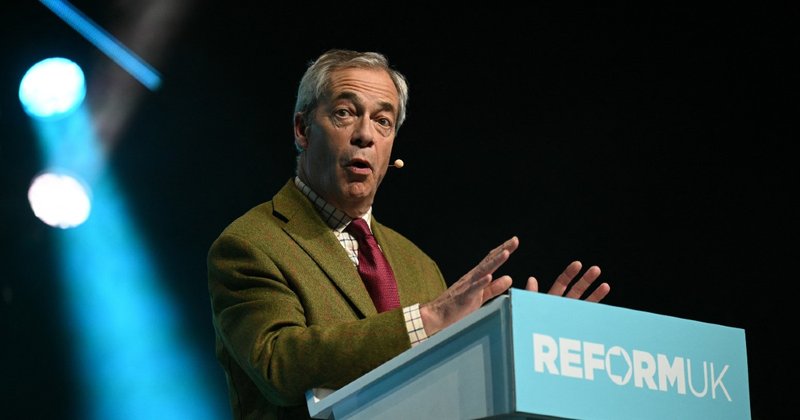
Over the past few months both Labour and the Conservatives have claimed Reform UK and the party’s leader Nigel Farage MP have broken promises made during last year’s local elections that Reform councils would cut council tax.
Mr Farage has denied this, saying repeatedly that he never promised to cut council tax, while Reform has defended its record, claiming that it has implemented lower council tax increases than other political parties and that some of its councils have delivered a “real terms tax cut” by increasing council tax by less than the rate of inflation.
We’ve taken a look at what Reform UK and Mr Farage said about council tax during last year’s local elections, as well as how Reform-led councils actually compare to others in England when it comes to council tax rises.
This article focuses on council tax in England (local taxes are devolved in Northern Ireland, Scotland and Wales). The figures throughout are based on council tax rates set by upper-tier local authorities in England (London boroughs, metropolitan boroughs, county councils and unitary authorities) for Band D properties, excluding parish precepts, for 2026/27.
Join 73,000 newsletter subscribers who trust us to check the facts
Sign up to get weekly updates on politics, immigration, health and more.
Subscribe to weekly email newsletters from Full Fact for updates on politics, immigration, health and more. Our fact checks are free to read but not to produce, so you will also get occasional emails about fundraising and other ways you can help. You can unsubscribe at any time. For more information about how we use your data see our Privacy Policy.
Did Nigel Farage promise to ‘cut council tax’?
Both Labour and the Conservatives have cited a leaflet circulated widely by Reform UK during the 2025 local election campaign with a pledge to “reduce waste and cut your taxes” next to an image of Mr Farage, while the Conservatives also highlighted a speech Mr Farage gave in March 2025, in which he said “we will cut taxes”.
Neither of these specifically mention council tax, and while it could be reasonably assumed that during a local election campaign references to cutting taxes might be taken to mean council tax, there’s also some evidence that this pledge referred to what Reform would do at a national level were it to be in government.
For example, the mention of cutting taxes in Mr Farage’s speech came during a section where he talked about what his party would do if it won the next general election, and was immediately followed by a specific commitment to increase income tax thresholds (which are not set by local authorities).
Similarly, the leaflet pledge to “reduce waste and cut your taxes” doesn’t specifically mention council tax, and is listed alongside two other commitments (to “freeze immigration and stop the boats” and to “scrap Net Zero to cut your energy bills”) which are clearly national pledges. (Mr Farage told Channel 4 News in March 2026 that all three of these commitments referred to national policies).
We’ve asked both Labour and the Conservatives if they’ve any evidence of Mr Farage specifically referencing cutting or freezing council tax during the 2025 local election campaign, but have not received a response from either.
Some Reform UK candidates did pledge to cut council tax
Although we couldn’t find any evidence of Mr Farage himself specifically pledging to cut council tax, we’ve found several examples of local candidates promising to “cut” or “freeze” council tax during last year’s local elections.
In North Northamptonshire, which Reform UK won control of in 2025, a letter signed by three local candidates, all of whom are now councillors (although one currently sits as an independent) explicitly pledged to “freeze council tax”.
In Leicestershire, shortly after being confirmed as council leader, Reform’s Dan Harrison said: “We're now looking at the cost, the efficiency, we'll then have money for front line [services] but we'll also be able to cut council tax.”
A spokesperson for Mr Harrison was unable to provide comment due to pre-election restrictions, but directed us to a press release which noted that Leicestershire’s council tax increase for 2026/27 was “the first time in a decade that the maximum increase hasn’t been taken.”
Following his election last year Durham council leader Andrew Husband said: “It is our ambition not to have another council tax increase next year” (though he described this as “something to strive for” rather than a firm commitment).
Mr Husband told Full Fact “There are targets still in place to relieve the financial pressure on our residents and nine months under the bonnet and we were able to deliver the lowest council tax increase in 15 years with no use of reserves, at 1.99% increase on social care precept and 0% on core council tax”. He added “If Labour hadn't [have] increased our NI contribution by £8m gross annually we would have achieved 0% on the social care precept too.”
Other leaflets promoting Reform candidates who ultimately weren’t elected pledged to “fight to reduce council tax” and to “freeze council tax & business rates”, while one local candidate said “Reform Councils will freeze, then cut your council tax bills.”
We’ve asked Reform UK whether these commitments were authorised by the party, but did not receive a response. We found at least one example of a local candidate committing to “lowering council tax” being shared by the party’s official X account.
In addition, a Reform leaflet featuring a picture of Nigel Farage alongside text which says “we fight for lower council tax” circulated in several different local areas.
Asked about this particular pledge again by Channel 4 News, Mr Farage said that Reform had delivered lower council tax increases than other parties.
Another leaflet which circulated in a number of local areas, including West Northamptonshire (won by Reform), included a pledge to “reduce council waste to help cut your taxes” alongside an image of Mr Farage. While this doesn’t explicitly refer to council tax, it appears implied by linking the pledge to reducing council waste.
What has actually happened?
Council tax increases have now been confirmed for 2026/27. Among upper-tier councils, every single one has increased council tax, and three-quarters increased it by the maximum allowed without holding a referendum (4.99%). None of the upper-tier local authorities mentioned above where Reform explicitly pledged to freeze or cut council tax have done so.
Currently, Reform has majority control of nine upper-tier local authorities—the council tax increases for these are:
- Derbyshire (4.9%)
- Durham (1.99%)
- Kent (3.99)
- Lancashire (3.8%)
- Lincolnshire (2.9%)
- North Northamptonshire (4.99%)
- Nottinghamshire (3.99%)
- Staffordshire (3.99%)
- West Northamptonshire (4.95%)
Reform has minority control of three upper-tier local authorities—the council tax increases for these are:
- Leicestershire (2.99%)
- Warwickshire (4.44%)
- Worcestershire (8.98%, with special permission from the UK government to increase beyond 4.99% without holding a referendum).
One local authority, Doncaster City Council, has a Reform majority, but is nominally controlled by Labour under its directly-elected mayor. A proposed increase of 4.99% was lowered to 2% by a Reform amendment.
Based on the current rate of CPI inflation (around 3%), three councils controlled by Reform (Durham, Lincolnshire and Leicestershire) have implemented effective real terms decreases.
How does Reform compare to other parties?
Reform claims to have delivered the lowest average council tax increase of any major party, at 3.94%.
Looking specifically at upper-tier councils where one party has majority control, this is correct. The nine upper-tier councils controlled by a Reform majority increased Band D council tax for 2026/27 by an average of 3.94%—lower than the overall average increase of 4.86%.
Councils with a Labour majority saw an average increase of 4.75%, compared to 4.89% for Conservative majority-led councils, and 5.49% for councils with a Lib Dem majority.
Reform didn’t include Doncaster in its figures, but if it had, the average increase for councils where Reform was the majority party would be slightly lower at 3.75%.
These figures look only at councils where one party leads the local authority with a majority. They change somewhat once councils where a party leads with a minority are included, although Reform-led councils still have the lowest average increase at 4.33%.
Have Reform councils delivered a £45m ‘reduction’ in council tax?
An image shared by Reform’s deputy leader Richard Tice MP on 16 March 2026 claimed that the party had delivered a £45 million “reduction in taxes in nine majority run councils compared with max rises under Labour, [Lib Dems] and Tories”.
While the wording of this claim isn’t very clear, the word “reduction” is potentially misleading. Although most Reform majority-led councils chose to increase council tax by less than the 4.99% maximum, none have actually reduced council tax in cash terms.
An article in the Telegraph describes this £45 million figure more clearly as the additional amount taxpayers would have had to pay in council tax in 2026/27 had all nine of these Reform councils chosen a 4.99% increase.
Reform UK did not confirm how exactly it produced this figure when we asked, but it appears to be based on the increase in the average Band D council tax multiplied by the council tax base (the estimated number of Band D equivalent homes) in each local authority, compared with how much this increase would have been had every council increased council tax by 4.99%.
So while residents may be paying less than they would have done were maximum increases to have been implemented across the board, there hasn’t actually been a “reduction in taxes” in cash terms.
It’s also worth pointing out that while the majority of local authorities have increased council tax by the 4.99% maximum, several Labour, Lib Dem and Conservative-led councils also have chosen lower increases. The lowest increases were seen in Hartlepool (1.98%, Labour controlled), Westminster (1.99%, Labour controlled) and Durham (1.99%, Reform controlled).
And at the other end of the scale, seven local authorities have been given permission to increase council tax beyond 4.99% without holding a referendum—including one Reform minority-led council (Worcestershire, 8.98%).