Did Rachel Reeves mislead the public ahead of the Budget?
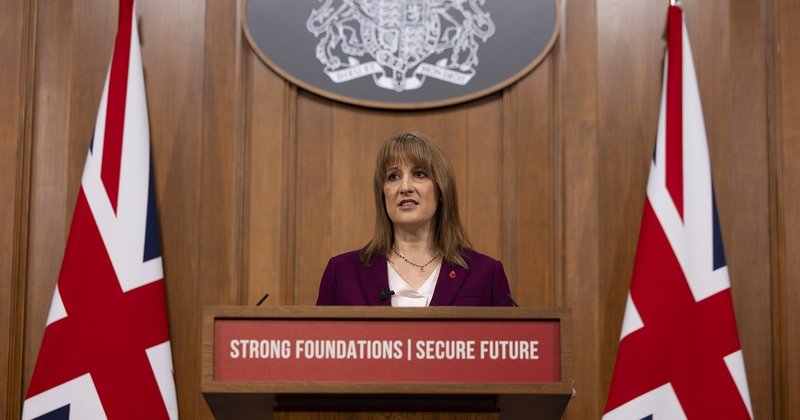
Leader of the opposition Kemi Badenoch used yesterday’s Prime Minister’s Questions to accuse chancellor Rachel Reeves of misleading people about the state of the public finances ahead of last week’s Budget.
Ms Badenoch said: “The Chancellor was briefing the media, twisting the facts, all so she could break her promises and raise taxes”.
The Conservative leader has also separately claimed the chancellor “lied” to the public ahead of the Budget in a 4 November press conference widely interpreted as laying the ground for tax rises.
It is clear that the fiscal picture facing the chancellor ahead of the Budget was worse than that at the time of the Spring Statement. Indeed, speaking to the Treasury select committee on Tuesday, Office for Budget Responsibility committee member Professor David Miles said that he did not think it was misleading “for the chancellor to say that the fiscal position was very challenging”. He noted that, taking into account the impact of the government’s U-turns since the Spring Statement, the chancellor would have been faced with a deficit of around £3 billion.
However the prevailing media narrative that the government would need to raise taxes or decrease spending by tens of billions of pounds to avoid a fiscal deficit, and go further to restore greater fiscal headroom, was not accurate. To be clear, Ms Reeves did not directly claim this herself, but nor did she seek to dispel it.
The government’s position is that it does not comment on Budget speculation. But when speaking about the fiscal picture ahead of the Budget, Ms Reeves failed to explain that a downgrade to UK productivity forecasts had been offset by higher than expected tax receipts, mentioning only the fact that productivity would be “weaker than previously thought”. It is what was not said that is important here.
A Treasury spokesperson told Full Fact that claims Ms Reeves misled the public were “false” and “not supported by the OBR”.
We’ve looked at why the chancellor is being accused of “twisting the facts”, the fiscal picture she was facing and whether she misled the public ahead of the Budget.
Join 73,000 newsletter subscribers who trust us to check the facts
Sign up to get weekly updates on politics, immigration, health and more.
Subscribe to weekly email newsletters from Full Fact for updates on politics, immigration, health and more. Our fact checks are free to read but not to produce, so you will also get occasional emails about fundraising and other ways you can help. You can unsubscribe at any time. For more information about how we use your data see our Privacy Policy.
Why is the Chancellor being accused of “twisting the facts”?
On 4 November, Ms Reeves alluded to the expectation that the Office for Budget Responsibility (OBR) would downgrade its forecasts for the economy, saying: “It is already clear that the productivity performance [...] is weaker than previously thought”. She added that this would have “consequences for the public finances too, in lower tax receipts.”
At the time, there was sustained speculation that the Treasury was planning to increase income tax rates, thereby breaching a key manifesto commitment. However on 12 November, it was reported that this proposal had been dropped following “better than expected OBR forecasts”.
On 26 November, the Budget ultimately saw overall tax increases forecast to raise £26 billion by 2030/31. That meant the OBR forecast that Ms Reeves was on track to meet her fiscal rule requiring day-to-day spending to be covered by receipts, with headroom (ie a buffer) of around £22 billion by the end of the forecast period. This is an increase on the £9.9 billion in headroom she gave herself in the Spring Statement.
However, on 28 November the OBR provided the Treasury select committee with documents revealing that its final forecast before taking into account government policy decisions made since the Spring Statement was sent to the Treasury on 31 October (five days before the Chancellor’s press conference). This showed that the government was operating with a £4.2 billion budget surplus. It also showed that the weaker productivity forecasts had been more than offset by increased forecast tax receipts.
This has led to claims that the chancellor misleadingly suggested that tax rises would be needed because of the productivity downgrade, when she already knew that the impact of that downgrade had been offset.
Was there a ‘black hole’ in the public finances?
Prior to the Budget it was widely reported that the government was facing a “black hole” in its spending plans—estimates of the size of which ranged from £20 to £50 billion. We wrote about this in detail in the run up to Budget Day.
We now know that this wasn’t the case. The OBR had in fact said that, based on the government’s plans at the time of the Spring Statement, it was forecast to meet its fiscal rule of covering day-to-day spending with receipts, by a margin of £4.2 billion.
Crucially though, this doesn’t actually mean the government had a £4.2 billion surplus. That’s because this figure did not take into account the decisions taken by the government since March to reverse its plans to means-test the Winter Fuel Payment, and to scrap most of its proposed changes to eligibility for sickness and disability benefits.
The OBR has since said that once these decisions were taken into account, the Chancellor would have been faced with a £3 billion deficit, rather than a £4.2 billion surplus.
However this is clearly a much smaller deficit than was being reported at the time. (The Treasury did not publicly confirm any of the larger ‘black hole’ estimates circulating ahead of the budget, and both Ms Reeves and the Prime Minister Sir Keir Starmer said some speculation was not accurate).
It’s also worth noting that while Ms Reeves could have chosen to only increase taxes in order to offset the impact of the government’s U-turns, this would have meant leaving herself the lowest headroom of any chancellor in history.
Following the Spring Statement the government’s headroom against its budget surplus rule was £9.9 billion—already low by historical standards. Ahead of the Budget, the Treasury confirmed that Ms Reeves was looking to increase this headroom, and in her 4 November speech she spoke of the need to “build more resilient public finances – with the headroom to withstand global turbulence”.
Ms Reeves also announced some measures in the Budget that would increase spending—perhaps most notably the removal of the two-child benefit limit—thereby further increasing the amount she needed to raise. In her Budget speech, she said that the cost of scrapping the two-child benefit limit would be “fully-funded” by money raised from “tackling fraud and error in our welfare system, cracking down on tax avoidance and reforming gambling taxation”.
Following this Budget, the OBR forecast the government to have headroom against its budget surplus rule of £22 billion.
Speaking on the BBC’s Sunday with Laura Kuenssberg following the Budget, the chancellor appeared to confirm that she had chosen to increase taxes in part to create more fiscal headroom, saying “I clearly could not deliver a budget with just £4.2bn of headroom” and “I was clear that I wanted to build up that resilience and that is why I took those decisions to get that headroom up to £21.7bn.”
Did the chancellor mislead over the public finances?
While we can’t say what the chancellor intended by her comments in her pre-Budget press conference, her remarks were certainly interpreted as implying that tax rises were necessary to offset weaker productivity forecasts.
We can also say for certain that the chancellor did not mention in her press conference that higher than expected tax receipts, due to higher inflation and wage growth, were forecast to “more than offset” this productivity downgrade, even though she knew this at the time. So while she didn’t directly say anything in her press conference that wasn’t accurate, she also left some important information out. In that sense it was misleading, because it did not give the full picture. Others have made a similar point.
Much of the reporting on the decision to abandon plans to increase income tax rates cited anonymous sources as saying that the U-turn was a result of “better than expected” OBR forecasts. This also appears misleading, as we now know the forecasts had not actually changed between Ms Reeves’ speech on 4 November, and these plans being reported as having been abandoned around one week later.
A Treasury spokesperson said: “To claim that a £16 billion downgrade to our productivity was “offset” by tax receipts is ridiculous. If the Chancellor had done nothing, this would have left headroom at £4.2 billion, the lowest any Chancellor would have ever delivered at a Budget.
“The Chancellor was clear in her speech that she wanted to increase headroom, and that is exactly what she did in the Budget. Any claims that she misled the public are false and not supported by the OBR”.
The Prime Minister has also claimed that there was “no misleading” as the productivity downgrade meant the government had “£16 billion less” than it otherwise would have. But again, while this is true in isolation, it fails to mention that this downgrade was entirely offset by forecast higher tax receipts, and that once other pressures (mainly due to higher welfare spending, government u-turns and higher debt interest) were factored in, the Prime Minister and the chancellor were actually looking at a £3 billion deficit, down from a £9.9 billion surplus at the time of the Spring Statement.