Smear test brushes are safe

What was claimed
The brush used in cervical smear tests is sterilised in “cancer-causing” ethylene oxide.
Our verdict
Overexposure to ethylene oxide can be dangerous, but medical devices sterilised with it are not unsafe.
We’ve seen claims circulating online that the brush used in cervical smear tests is sterilised in a “cancer-causing” chemical called ethylene oxide.
Ethylene oxide is a gas that is commonly used to sterilise all sorts of medical devices, including swabs and speculums. Although overexposure can be dangerous, there is no credible evidence it endangers patients who come into contact with sterilised medical devices.
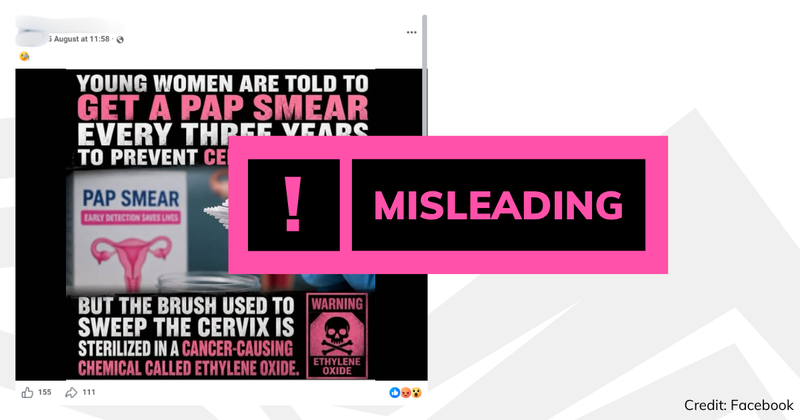
Posts sharing the claim that the chemical used to sterilise swabs used in cervical smears is “cancer-causing” and implying that it is therefore dangerous to have a smear test have been shared hundreds of times across Facebook, Instagram and X.
It’s true that ethylene oxide can be carcinogenic or cause other health issues at certain levels of exposure, such as lung damage in severe cases of inhalation. But as we have explained before, when writing about ethylene oxide’s use sterilising Covid-19 lateral flow tests, medical devices sterilised with it are not unsafe.
A spokesperson for the Medicines and Healthcare products Regulatory Agency (MHRA) told us “there is no credible evidence that the swabs used in cervical smear tests are associated with cancer”.
Negative health effects would involve higher, prolonged levels of exposure.
Join 75,000 newsletter subscribers who trust us to check the facts
Sign up to get weekly updates on politics, immigration, health and more.
Subscribe to weekly email newsletters from Full Fact for updates on politics, immigration, health and more. Our fact checks are free to read but not to produce, so you will also get occasional emails about fundraising and other ways you can help. You can unsubscribe at any time. For more information about how we use your data see our Privacy Policy.
What happens when swabs are sterilised?
Professor Andrea Sella, professor of inorganic chemistry at University College London, also previously told us that the “sterilisation process involves exposing a material to ethylene oxide for a few seconds or minutes, and then removing the gas entirely before the now sterile item is packaged”.
He said: “There is nothing left of the ethylene oxide once it is packaged, and there is no conceivable harm that can come from using an item sterilised in this way.”
Dr Alexander Edwards, associate professor in biomedical technology at University of Reading, likewise told fact checkers at Reuters that “before any medical device is released from manufacture, it will be carefully checked to ensure no residual ethylene oxide is left”.
False, misleading or unevidenced health claims can cause harm if people make treatment decisions based on them. Trustworthy information can be found from sources such as the NHS and the World Health Organisation.
This article is part of our work fact checking potentially false pictures, videos and stories on Facebook. You can read more about this—and find out how to report Facebook content—here. For the purposes of that scheme, we’ve rated this claim as missing context because the implied claim, that smear tests are unsafe due to ethylene oxide, is false.
Was this helpful?
Full Fact fights for good, reliable information in the media, online, and in politics.