Meningitis B: your questions answered
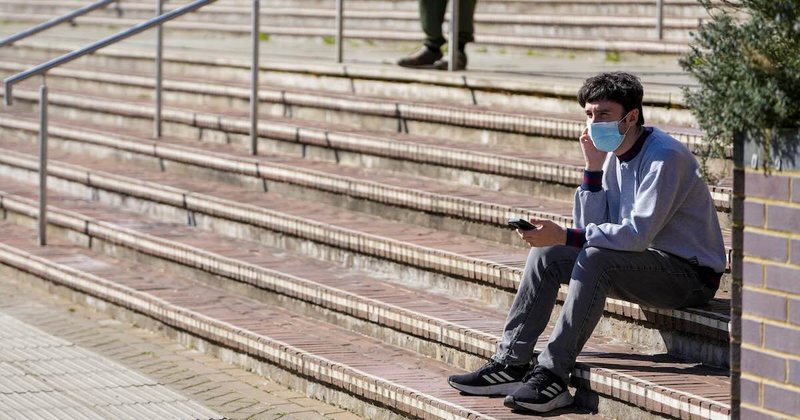
The health secretary Wes Streeting has asked the Joint Committee on Vaccination and Immunisation (JCVI) to review its advice on the MenB vaccine, following an outbreak in Kent which as of 1pm on Monday 23 March has been linked to 29 confirmed and suspected cases of invasive meningococcal disease.
We asked Full Fact readers for their specific questions about the vaccine and the disease itself, and have answered some of them below. We will continue to monitor new questions from readers and may add more answers in due course.
You can find further information about the Meningitis B outbreak from the UK Health Security Agency on the Gov.uk website.
Join 73,000 newsletter subscribers who trust us to check the facts
Sign up to get weekly updates on politics, immigration, health and more.
Subscribe to weekly email newsletters from Full Fact for updates on politics, immigration, health and more. Our fact checks are free to read but not to produce, so you will also get occasional emails about fundraising and other ways you can help. You can unsubscribe at any time. For more information about how we use your data see our Privacy Policy.
At a glance…
- Why doesn’t everyone already get the MenB vaccine?
- Is this an outbreak of ‘meningitis’ or ‘invasive meningococcal disease’?
- Is the vaccine being rolled out to all students? And is it free?
- Does the MenB vaccine protect you for life?
- How common is MenB? Is this outbreak unusual?
- Should people take precautions if they’re in the outbreak area?
- Does the MenACWY vaccine protect against Men B?
- Does this outbreak have anything to do with ‘Exercise Pegasus’?
- Did Keir Starmer really say the UK might need another lockdown?
Why doesn’t everyone already get the MenB vaccine?
Babies are at the highest risk of invasive meningococcal disease (IMD) from the germ known as MenB, so since 2015 they have been offered the MenB vaccine on the NHS.
The government says this has been shown to be 83% effective at preventing all forms of the disease, and rates of MenB disease in young children have fallen since.
The NHS also offers the vaccine to some other people who are at higher risk, including those with coeliac disease, sickle cell anaemia, spleen disorders and complement disorders.
Shortly before the MenB vaccine was introduced, the JCVI considered whether it should also be routinely offered to adolescents, given that people in their late teens are the second highest risk group.
This was a complex question, but in the end the JCVI concluded that while vaccinating adolescents might be cost effective “the degree of uncertainty regarding duration of protection and protection against acquisition of meningococcal carriage meant the Committee was unable to form a recommendation on the use of [the vaccine] in adolescents, as there was a significant risk such a programme would result in a net loss of health in the population through displacement of other interventions within the health service”.
In short, there wasn’t convincing evidence that a vaccination programme in adolescents would do more good than harm overall.
In March 2025, the JCVI’s meningococcal subcommittee heard new evidence “which showed that MenB vaccination did not reduce carriage significantly in teenagers”. Minutes from the subsequent JCVI meeting said: “These results emphasised that MenB vaccines should be used primarily for providing direct protection to individuals.”
However, as we’ve noted, the health secretary has now asked the JCVI to review its advice on the MenB vaccine.
Is this an outbreak of ‘meningitis’ or ‘invasive meningococcal disease’?
The meningococcal group B, or MenB, bacteria is common in the UK and usually stays in people’s throat or noses, where it rarely causes serious illness.
On occasion it can infect other parts of the body and become life-threatening. When this happens, it is called invasive meningococcal disease or IMD, and it most often affects either the blood (septicaemia) or the lining of the brain (meningitis) or both.
We don’t know which types of disease have been involved in the cases identified so far.
The daily updates from the UK Health Security Agency (UKHSA) list the number of cases of invasive meningococcal disease.
The terms are easy to mix up. In fact, while researching this article we noticed that a UKHSA blog confused the two. The agency has now corrected this after we got in touch.
Is the vaccine being rolled out to all students? And is it free?
The government is offering the MenB vaccine for free in a targeted campaign to about 5,000 people at the University of Kent, and this may be extended to more people as required.
It is not currently offered for free to most people, as the risk to the general population is low—although it can be taken privately where stocks are available.
As the UKHSA says, the MenB vaccine stops people getting ill from the disease, but it doesn’t stop them carrying or spreading it, which is why it is targeting people at ongoing increased risk of exposure.
The MenACWY vaccine, which protects against other forms of meningitis and septicaemia, is offered to all children when they are 13 or 14, or slightly older in Northern Ireland. Anyone who has missed this can catch up until the age of 25.
Does the MenB vaccine protect you for life?
Scientists are still trying to understand exactly how long protection lasts, but it does seem that the vaccine only protects people for a few years—not for their whole life.
Speaking to the Science Media Centre, several scientists have given their opinion on this.
- Adam Finn, Professor Emeritus of Paediatrics at the University of Bristol, said: “Protection by the vaccine lasts for some years but not forever.”
- Johnjoe McFadden, Emeritus Professor at the University of Surrey, said: “The vaccine, given in two [doses], at least four weeks apart, offers up to three years of protection from the infection.”
- Dr Eliza Gil, Clinical Lecturer at the London School of Hygiene & Tropical Medicine, said: “The protection the vaccine offers is imperfect and is thought to only last a few years.”
- Dr David Elliman, Honorary Associate Professor in Child Health at UCL GOSH Institute of Child Health, said: “The protection from the vaccine appears not to last as long as that from the MenACWY vaccines.”
The MenB vaccine protects people against the disease, but not from carrying or spreading it. It is effective against many strains of MenB, but not all of them.
The vaccine protection is very good, but not perfect. Dr Bharat Pankhania, Senior Clinical Lecturer in Public Health Medicine at the University of Exeter Medical School, says that the vaccine offers about 70-90% protection against the most common forms of MenB meningococcal disease, and about 50-70% protection against the most invasive forms.
How common is MenB? Is this outbreak unusual?
The MenB bacteria is actually quite common in the UK and is usually found in the nose and throat. As the UKHSA says: “Between 5% and 11% of adults and up to 25% of adolescents carry the bacteria without any signs or symptoms of the disease, although carriage rates appear to be lower in more recent studies.”
Cases of invasive MenB disease, however, where the germ infects other parts of the body, are rare. And in fact they are now much rarer than they used to be, mainly thanks to a large reduction in the number of cases in children under 5.
There were 1,495 laboratory-confirmed invasive meningococcal B infections in England in the year ending in the summer of 2000, 792 of which were in under-5s. In the year ending 2025, there were a total of just 313, 61 of which were in under-5s.
Among people older than one, there are now less than two cases per 100,000 in England each year.
Invasive MenB has also become much rarer among 15-19-olds, from nearly 200 cases a year at the beginning of the century to about 50-70 a year recently.
In this context, the 29 confirmed and suspected cases identified in the Kent outbreak as of 20 March already represent about a tenth of the total England would expect in a year. This outbreak is considered unusual by experts in the field, and Mr Streeting has called it “unprecedented”.
Deaths from all forms of IMD, including the A, C, W and Y types, are also much less common than they used to be, with fewer than 50 happening annually in England in recent years, compared with about 200 a year at the start of the century.
Should people take precautions if they’re in the outbreak area?
Some specific groups of people are being offered antibiotics or the MenB vaccine, but the UKHSA told us it has issued no general advice about people changing their plans, avoiding specific areas or wearing face masks.
It also directed us to its general advice on the outbreak. This includes being aware of the symptoms of meningitis and sepsis and seeking immediate help if you are concerned.
Does the MenACWY vaccine protect against MenB?
The short answer is no. The MenACWY vaccine routinely offered to teenagers does not protect them against MenB, as confirmed by both the UKHSA and the Vaccine Knowledge Project.
Interestingly, there is evidence of some protection the other way around. People who receive the MenB vaccine do seem to get some protection against the A, C, W and Y versions of the bacteria, as experts have noted.
It has also been used to provide some protection against gonorrhea, a different disease caused by a closely related bacteria.
Does this outbreak have anything to do with ‘Exercise Pegasus’?
Exercise Pegasus was a preparedness simulation conducted in 2025 to help the authorities practise their response to an imaginary pandemic. Simulations like this are often used to improve pandemic preparedness, and are not evidence of some kind of conspiracy that might lead to the subsequent MenB outbreak, as we’ve seen some people suggesting online.
Our article about Exercise Pegasus explains that it involved a fictional virus that was said to be capable of causing meningitis. But this does not suggest there’s any reason to think that the recent meningitis cases were somehow caused by the exercise.
Did Keir Starmer really say the UK might need another lockdown?
Although this claim may have been originally intended as a joke, we found several examples of people who seem to believe it, as we’ve explained in a separate fact check.
We can find no credible reports of the Prime Minister saying there might be a lockdown in response to the MenB outbreak, and Number 10 told us he has never said this.
Got a question?
If you’ve seen something you’d like us to fact check or explain, please let us know on X or Facebook, or via our website. While we can’t respond to every message, we’ll use your suggestions to help shape the article as and when we add to it.