Prisons are overcrowded but escapes are not as common as they used to be
The Labour Party took to Facebook last night to claim:
Following a few high profile cases of absonding prisoners in the last few months, in June Full Fact took a look at how regular the occurrence was. There's three ways by which prisoners are counted as having gone on the run: 'escaping', 'absconding' and 'failing to return on temporary licence'.
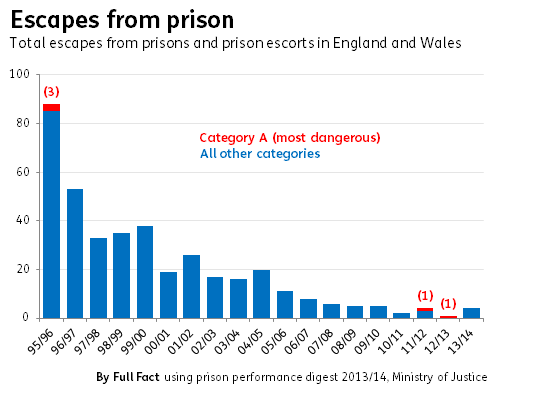
Escapes - where prisoners breach a physical barrier - happen rarely and are much less common than in previous decades, though they have ticked up slightly in the last year.
Join 73,000 newsletter subscribers who trust us to check the facts
Sign up to get weekly updates on politics, immigration, health and more.
Subscribe to weekly email newsletters from Full Fact for updates on politics, immigration, health and more. Our fact checks are free to read but not to produce, so you will also get occasional emails about fundraising and other ways you can help. You can unsubscribe at any time. For more information about how we use your data see our Privacy Policy.
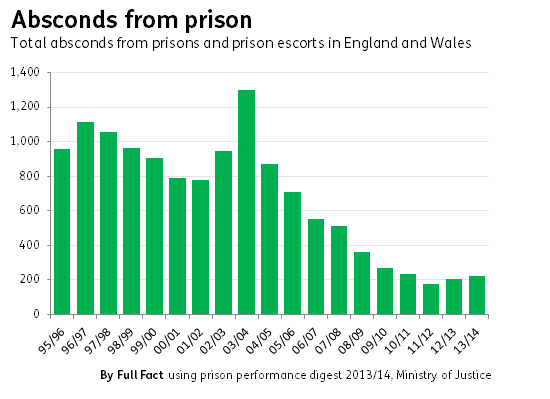
The number of absconds - where there's no physical barrier, like in open prisons - also rose slightly in the last two years, but are happening less often than they used to as well.
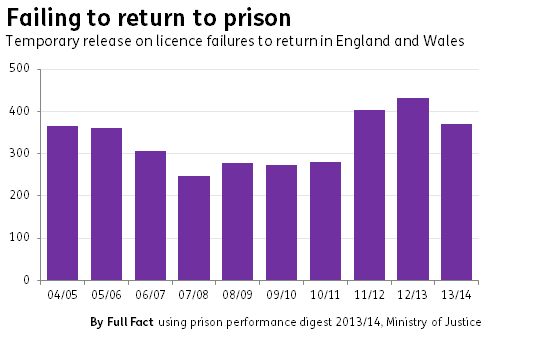
The third way is failing to return on temporary licence - where prisoners fail to return when they're required. This has seen an increase in occurrences, although the number has fallen in the last year. This is partly because the practice of releasing prisoners has also been used more often.
There's more detail on these in our Factcheck. We've also covered overcrowing in prisons in a Factcheck from June. The answer: prisons are overcrowded and are close to what's considered to be a safe capacity.