Resident doctors’ pay: how much do they earn and what is the BMA calling for?
At a glance
- Doctors have just been awarded a pay rise, so why are they planning to strike?
- Did resident doctors get a 28.9% pay rise over three years?
- What do resident doctors currently earn?
- What about extra earnings?
- What are specialty training places, and why have they become part of the dispute?
- Are resident doctors paid much less than doctors in other countries?
In March 2026, the government accepted recommendations from the Review Body on Doctors’ and Dentists’ Remuneration (DDRB) to give all resident doctors in England (previously called junior doctors) a pay rise of 3.5% for 2026/27.
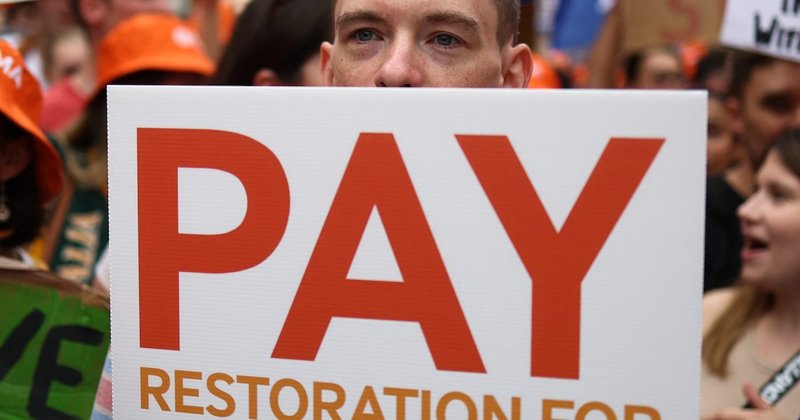
But the British Medical Association (BMA) says this is not enough to make up for the erosion in the value of their pay that it says has happened since 2008.
In July 2025, the BMA had announced that its members had voted to strike. Industrial action by resident doctors subsequently took place in July, November and December 2025. Following a ballot on the subject, the BMA has also included the availability of specialty training places in the dispute (more on this below).
Following another ballot in January 2026, the BMA announced new strikes on 7-13 April.
This explainer looks at what NHS resident doctors earn and what the BMA is asking for.
Doctors have just been awarded a pay rise, so why are they planning to strike?
The BMA argues that the value of resident doctors’ pay has been eroded by inflation since 2008/09, meaning they effectively had a 21% real-terms pay cut up to 2025/26.
This figure is based on some questionable assumptions, however. In particular, it uses an unreliable measure of inflation, as we explained last year. Our analysis with the Royal Statistical Society suggests that the real-terms fall from 2008/09 to 2025/26 was more like 6-7%.
The BMA has published hourly pay figures showing what the pay “restoration” it is asking for would look like. These pay figures amount to a 29% rise in 2025/26 on the basic rates from 2024/25, instead of the 5-6% pay rise that the government announced last year.
It has also called this year’s 3.5% a “real terms pay cut”, but again this claim relied on using the unreliable RPI measure of inflation.
Did resident doctors get a 28.9% pay rise over three years?
It is often said that resident doctors had a 28.9% pay rise covering the years from 2023/24 to 2025/26. This is correct, in terms of the cash amount that they received on average.
The 28.9% figure represents the combined effect of several pay rises:
- An average pay rise of 8.8% for 2023/24
- A further 4.05% pay rise for the same year, on average, agreed with the Labour government after the 2024 election
- An average pay rise of 8% for 2024/25 agreed with the new government at the same time
- The average pay rise of 5.4% for 2025/26
Together, these pay rises amount to a rise of 28.9%, without adjustment for inflation. The further rise of 3.5% in 2026/27 will bring the total over four years to 33.4%.
The government made an improved offer for 2026/27 to the BMA, which was rejected. Had it been accepted, the health secretary Wes Streeting says it would have amounted to a 4.9% pay rise, when taking account of the changes in pay structure and reimbursement of exam fees. This would have brought the combined four-year rise to 35.2%.
However, it is debatable whether this overall rise would really have been “as a result of the choices that I would have made as health secretary,” as Mr Streeting has claimed.
This is because, while the first 8.8% of these rises was included as part of the agreement between the BMA and the present government in September 2024, it had already been awarded by Rishi Sunak’s Conservative government in July 2023, and had been paid to doctors since September that year.
So the scale of the rise has been largely determined while Mr Streeting was health secretary, but some of it had been awarded before he began the job.
Join 75,000 newsletter subscribers who trust us to check the facts
Sign up to get weekly updates on politics, immigration, health and more.
Subscribe to weekly email newsletters from Full Fact for updates on politics, immigration, health and more. Our fact checks are free to read but not to produce, so you will also get occasional emails about fundraising and other ways you can help. You can unsubscribe at any time. For more information about how we use your data see our Privacy Policy.
What do resident doctors currently earn?
In the data for January 2026, there were 80,816 resident doctors working for NHS England. (Although a few are part-time, making this the equivalent of 77,776 full-time doctors.) These are working, qualified doctors who are also in the process of training towards a specialty, which can take a decade or more. They do not include consultants, GPs, surgeons or other senior doctors who have completed their specialist training.
Resident doctors begin work after graduating with a medical degree. They are supervised by a more senior doctor, but as they gain experience some may also begin to supervise their more junior colleagues. Resident doctors need to pass exams at various points.
In short, there are many different types of resident doctor, with different levels of seniority and pay, as summarised below.
When speaking about basic pay only, for a 40-hour week, resident doctors currently earn between £40,190 and £76,582 a year, as recommended by the pay review body.
What about extra earnings?
Basic pay doesn’t cover everything that resident doctors earn. In its data for staff earnings, covering the year ending January 2026, NHS England estimates how much different types of medical staff earned in that period.
This shows that in practice, resident doctors typically earn around 27-31% more than their basic salary from other sources. Most of the extra pay comes from working extra hours and working unsocial hours, but it also includes geographic differences and other things.
According to NHS England workforce figures for January 2026, using full-time equivalent figures, the resident doctor workforce breaks down as follows:
- Foundation Doctor Year 1: 8,507 doctors, 11% of the total
- Foundation Doctor Year 2: 7,755 doctors, 10% of the total
- Core Training: 25,767 doctors, 33% of the total
- Specialty Registrar: 35,746 doctors, 46% of the total
This means that the earnings of the average resident doctor would be closer to the higher figures than the lower ones.
What are specialty training places, and why have they become part of the dispute?
As we’ve said, resident doctors are training to become specialists, but this training process doesn’t just happen automatically. In order to progress to their chosen specialty, a resident doctor must secure one of a limited number of places to train in that area—and in some specialties they also need to re-apply at a later stage. Getting a place on many of these courses is extremely difficult, with competition ratios suggesting that there are often more than a dozen applicants for every post.
The BMA says that “poor workforce planning by successive governments means there aren’t enough specialty training places for [resident doctors] to go to”. An initial diagnostic report by Professors Chris Whitty and Steve Powis, which was published in October 2025, raised a number of concerns and offered some recommendations. The report says: “Although postgraduate medical training places have grown in number, this expansion has not kept pace with growth in the medical workforce, resulting in ever increasing competition for formal training posts.”
Mr Streeting’s revised offer in March 2026 would have raised the number of additional specialty training posts beyond the 1,000 additional posts set out in legislation. The deal offered between 4,000 and 4,500 new additional specialty posts to be “delivered over the next three years.”
Are resident doctors paid much less than doctors in other countries?
An obvious way to judge whether resident doctors are well paid is to look at how much similar doctors are being paid in other countries.
Unfortunately, that’s easier said than done, because different countries may categorise doctors differently, or pay them in different ways for different kinds of work. Their working conditions and their benefits may vary too, and life in other countries brings with it a whole range of other pros and cons, including different taxes.
Nevertheless, after listing many of the problems with international comparisons, the 2026 pay review did publish some research on doctors’ pay in other countries. Their work, which adjusted the figures to purchasing-power parity, revealed some broad differences.
- Australia DDRB, based on 2023/24: “Compared to England… the Australian average is 17 per cent higher than specialty doctors and 41 per cent higher than registrars.”
- New Zealand DDRB, based on 2025: House officers and registrars receive 5-37% more basic pay in England than in New Zealand, when looking at published pay bands rather than earnings.
Ireland and Northern Ireland DDRB, based on 2025: Foundation doctors, house officers and registrars are generally paid more in England than in Ireland or Northern Ireland, when looking at published pay scales rather than earnings. Resident doctor equivalents in England receive between 93% and 127% of their equivalents in Ireland.
Update 8 July 2025
This article was updated after resident doctors voted to strike.
Update 24 July 2025
New sections on past pay rises and international comparisons were added.
Update 24 October 2025
New strike dates and details of the specialty training dispute were added.
Update 13 November 2025
This article was updated to add background information on the speciality training dispute.
Update 2 February 2026
This article was updated to include a reference to our analysis on the real change in resident doctors’ pay.
Update 3 December 2025
This article was updated with the latest data
Update 15 December 2025
This article was updated with new information about the BMA ballot on the government’s latest offer.
Update 2 April 2026
This article was updated to include the latest data, new developments in negotiations and updated information from the 2026 pay review.
Was this helpful?
Full Fact fights for good, reliable information in the media, online, and in politics.