Video of ‘asylum seeker’ saying he wants ‘more money and more freedom’ is AI-generated

What was claimed
A video shows an “asylum seeker” saying he’s not happy with the way he’s being treated, that he wants “more money and more freedom” and that the UK isn’t properly looking after him.
Our verdict
This video isn’t real—it’s AI-generated. The clip contains a SynthID watermark, suggesting it was made with Google’s AI tools, and the comments made don’t match reports of a real interview the fake footage appears to be based on.
A video supposedly showing an “asylum seeker” saying he wants “more money and more freedom” and that the UK “is not looking after” him is actually AI-generated.
It contains a SynthID watermark on both its audio and video, which signals it was made or edited with Google’s AI tools. And the comments made in the clip don’t match reports of a real interview the fake footage appears to be based on.
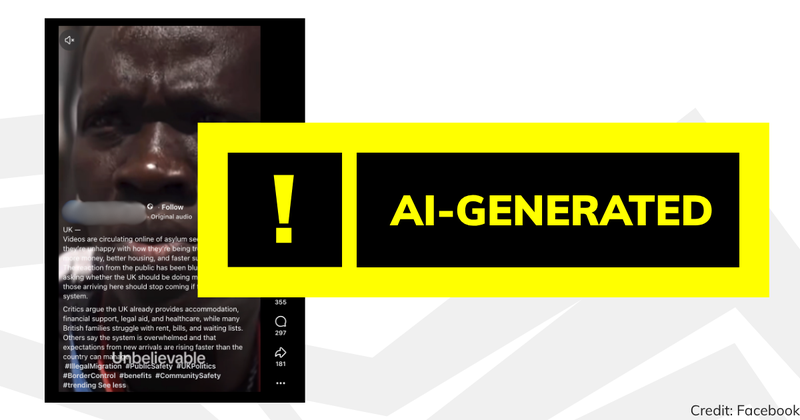
In the clip, which we’ve seen shared on Facebook, X and TikTok, a man appears to say: “I’m not happy with the way we are treated. I want more money and more freedom. The UK is not looking after us and we need proper homes.”
One of the posts we’ve seen sharing the footage claims: “Videos are circulating online of asylum seekers saying they’re unhappy with how they’re being treated, demanding more money, better housing, and faster support.”
Join 75,000 newsletter subscribers who trust us to check the facts
Sign up to get weekly updates on politics, immigration, health and more.
Subscribe to weekly email newsletters from Full Fact for updates on politics, immigration, health and more. Our fact checks are free to read but not to produce, so you will also get occasional emails about fundraising and other ways you can help. You can unsubscribe at any time. For more information about how we use your data see our Privacy Policy.
As Reuters has noted, the man in the video appears to resemble a man who was interviewed by the BBC last year. The clothes the man is wearing and a distortion in the railings shown behind the man’s right ear appear to be a close match.
However he does not say the above quote in the clip used by the BBC, and the broadcaster told Reuters that it “does not align with what he told the BBC during his interview”. The voice of the man interviewed by the BBC also appears to be different to that of the man in the clip now circulating.
We couldn’t find any other evidence to suggest the clip now being shared online is real, or has been shared by any mainstream news outlets.
Before sharing content like this that you come across online, it’s important to consider whether it comes from a trustworthy and verifiable source. Our misinformation toolkit contains tips on how to do this.
Was this helpful?
Full Fact fights for good, reliable information in the media, online, and in politics.