What was claimed
Resident doctors in England have had a 21% real-terms pay cut since 2008/9.
Our verdict
This figure relies on a number of questionable assumptions. In particular, it’s calculated using an unreliable measure of inflation. Other measures suggest the drop has been less—our independently verified analysis using a measure backed by the Royal Statistical Society puts it at more like 6-7%.
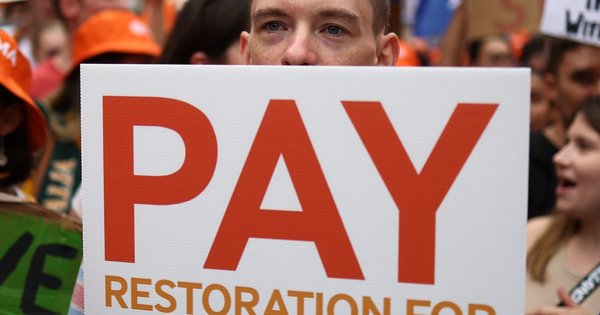
Since resident doctors began striking over pay in 2023, the dispute has always centred on a single calculation by the doctors’ union, the British Medical Association (BMA), about how much their pay has fallen in real terms.
Everyone agrees that resident doctors, formerly known as junior doctors, receive more in cash terms than ever before. The problem is inflation, the gradual rise in prices—usually—which causes that cash to lose value over time.
Thanks to these price rises, the BMA has repeatedly said that the real value of resident doctors’ pay has fallen in recent years. Its latest figures claim that in real terms, resident doctors’ pay in England has been eroded by about 21% since 2008/9. The figure has been widely quoted in recent weeks, for example in news reports and social media posts from the BMA itself.
But is that calculation correct? There’s no mistake in the BMA’s maths, as far as we can tell. But it has used an unreliable measure of inflation, and made other choices that make the scale of the cut look larger.
Other measures of inflation, which statisticians have said are more reliable, suggest the real-terms cut is much less than the 21% cited by the BMA. And our new analysis, conducted with the help of an independent expert member of the Royal Statistical Society (RSS), shows for the first time how resident doctors’ pay has changed according to the measure of inflation that the RSS recommends.
According to these calculations, it’s true that the value of resident doctors’ pay has fallen in real terms since 2008/9, but not by 21%. Our analysis puts it at more like 6-7%.
What’s wrong with the BMA’s calculations?
When trying to adjust people’s pay for the effects of inflation, you need a reliable way of measuring what the effects were.
The main problem with the BMA’s estimate is that it uses the Retail Prices Index (RPI), which the national statistician writing for the Office for National Statistics (ONS) has called “a very poor measure of general inflation”, and which the UK Statistics Authority says is “not fit for purpose”, adding “we strongly discourage its use”.
The standard measure of inflation is the Consumer Prices Index, or CPI, which is classified as an “official statistic”. But the BMA has said it uses RPI (no longer an official statistic) because many of its members have student loans, the interest on which is calculated using RPI. The chair of the BMA, Dr Thomas Dolphin, also told the BBC’s Today programme that the union prefers RPI “because we think you’ve got to include housing costs in the measure”. And a BMA statement to the Telegraph in June cited both these reasons.
A special version of CPI, called CPIH, does attempt to include housing costs, and this is what the Institute for Fiscal Studies has used to estimate the real changes in doctors’ pay. For its part, the Nuffield Trust, a health think tank, uses CPI, but says results using CPIH would give “similar results”.
The RSS has often argued that CPI is not well suited to the BMA’s purpose, however, because it is more of a macroeconomic indicator to gauge the “general performance of the economy” than a guide to the real costs of living that households face.
In a letter to the Financial Times last week, the RSS argued that “the solution” to these problems is an alternative, relatively new measure of inflation: the Household Costs Index (HCI). This measure is classified as an official statistic in development, meaning it may be revised if its methodology is changed in future.
It may not be a fully official statistic just yet, but HCI does include both housing costs and the direct costs of student loans, and it is published regularly by the ONS, making it well suited to the calculation the BMA is trying to do.
HCI provides a general measure that applies to all households, but you can also use it to show how inflation affects specific groups of people differently. Evidence from the DHSC suggests that the income of resident doctors puts them on average very roughly in the eighth or ninth decile in terms of income (ie the third- or second-highest). That’s only an estimate, and it’s a figure for individuals instead of households, but it might provide a better way of showing how people at their income level experienced inflation.
Either way, our calculations using HCI—which have been independently verified by Jill Leyland, a former vice president of the RSS who now represents it on the National Statistician’s Advisory Panel on Consumer Prices—suggest that the erosion of resident doctors’ pay is about a third as much as the BMA has estimated.
When you measure inflation matters too
The BMA’s estimate also decides to measure the inflation for each year according to the annual rate in its final month. But Ms Leyland told us this isn’t really the best thing to do, as prices can change on a monthly basis. This is why the Nuffield Trust made its estimate by averaging the rate of inflation for all 12 months of each year.
Choosing one specific month, instead of averaging, can make a substantial difference. When we re-calculated our estimate using the average for the previous year instead, it reduced the extent of the pay erosion from about 9% to about 6-7%.
If the BMA made a similar choice, by our calculations it would reduce their estimate based on RPI from 21% to about 18%.
As the chart above shows, both how and when you measure inflation can have a serious impact on the calculation. By our estimates, the figures range from around 3% (using CPIH on a 12-month average) to around 21% (using RPI and April figures, as the BMA have).
Why start in 2008/9?
As the Nuffield Trust and others have pointed out, the change in resident doctors’ pay is very sensitive to the baseline you compare it with as well.
The BMA has told the Telegraph that 2008 was ”when our pay cuts began”. This appears to be true. Analysis by the Nuffield Trust shows that resident doctors generally received annual real-terms pay rises throughout the 1990s and early 2000s, before a sustained period of real-terms falls starting in 2008/9.
This means the BMA has chosen to compare its members’ pay with one of the high points, in real terms, in the last 35 years. Looking this far back also means that most of today’s resident doctors won’t themselves have experienced the whole cut. As the Nuffield Trust analysis points out, 2008/9 was several years before most of them even began their medical degrees.
None of this tells us anything about what ‘fair’ pay would be, but it’s an important part of understanding what the claims of a 21% pay cut represent.
Dr Sarah Cumbers, CEO of the RSS, told us: “Full Fact’s calculations underline how much the choice of inflation index matters. CPI and CPIH are useful for macroeconomic analysis, but they were never intended for uprating. RPI, which was designed for that purpose, no longer provides a reliable measure and will in effect converge with CPIH from 2030.
“This makes it all the more important that the ONS completes its work on the Household Costs Indices, which are designed to reflect inflation as households actually experience it.”
A Nuffield Trust Fellow, Stelios Vassiliou, also told us: “You can paint a very different picture of real-terms changes to resident doctors’ pay packets over time, depending on the methods you use, so we need to bear this in mind when scrutinising different claims about pay erosion.
"Given the importance of the debate for doctors, their colleagues, patients and taxpayers, it is crucial that we look at all the ways that pay can be seen to have changed. We hope that greater reflection from all sides on the range of different ways you can measure pay erosion will lead to resolution and a fair settlement.”
What does the BMA say?
When we put our conclusions to the BMA, it told us: “Different measures and calculations will of course produce different results.
“We use the methodology and measures we believe best reflect the pay erosion our members have experienced since 2008/09 and the living expenses they face, as you have reported on several times before. Therefore we have nothing more to add.”