Fake AI-edited image of Reform UK MP Sarah Pochin circulates online

What was claimed
An image shows Reform UK MP Sarah Pochin with Asian supporters.
Our verdict
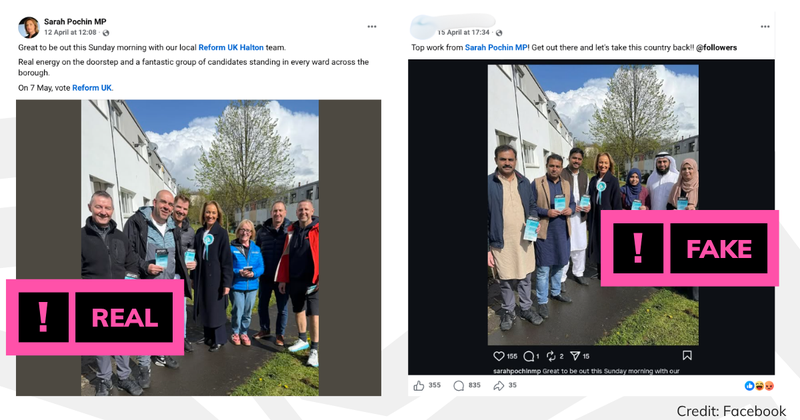
This image has been edited to change the supporters standing with her in the original photo posted by Ms Pochin. The edited image contains a SynthID watermark, indicating it was changed using Google AI tools.
An image of Reform UK MP Sarah Pochin on the campaign trail has been edited to change the supporters she’s standing with.
Ms Pochin posted the original photograph showing her out campaigning with the local Reform UK Halton team on Facebook and Instagram on 12 April. In this photo the group of supporters appear to be white.
Within hours, an edited version of the image now showing Ms Pochin with a different group of seemingly Asian people was being shared online.
When we ran the fake version through Google’s large language model (LLM) Gemini it told us it had a SynthID digital watermark, indicating it was altered using Google AI tools.
Nonsensical text on the leaflets in the edited version also suggest it was manipulated with AI.
Join 75,000 newsletter subscribers who trust us to check the facts
Sign up to get weekly updates on politics, immigration, health and more.
Subscribe to weekly email newsletters from Full Fact for updates on politics, immigration, health and more. Our fact checks are free to read but not to produce, so you will also get occasional emails about fundraising and other ways you can help. You can unsubscribe at any time. For more information about how we use your data see our Privacy Policy.
Head of Local Government Delivery for Reform UK, Ben Bradley, confirmed on X that the image was fake. We have also contacted Ms Pochin and Reform UK for comment.
Comments underneath the fake photo, such as “I've just gone off Reform UK after seeing this picture”, suggest people think the images are genuine.
The earliest version of the edited image we could find online was posted by an account that has shared several fake and edited images of Reform UK politicians. We’ve attempted to contact the account for comment.
The account also shared a manipulated version of a real image originally posted by Reform UK MP Lee Anderson—in the manipulated version, the supporters behind Mr Anderson have been altered to make them majority Asian. And another image shared by the X account was an edited version of another real photo posted by Mr Anderson—in the edited version, the ethnicity of some of the supporters has been changed and the sign edited to say “Reform Yookay welcomes clueless voters”.
Before sharing content like this that you see on social media, it’s important to consider whether it comes from a trustworthy source, or if it’s been created to make you feel a certain way. Our Full Fact toolkit contains guides on how to spot suspected AI content.
This article is part of our work fact checking potentially false pictures, videos and stories on Facebook. You can read more about this—and find out how to report Facebook content—here. For the purposes of that scheme, we’ve rated this claim as altered because this image has been edited to include a different group of supporters to the original photo posted by Ms Pochin.
Was this helpful?
Full Fact fights for good, reliable information in the media, online, and in politics.