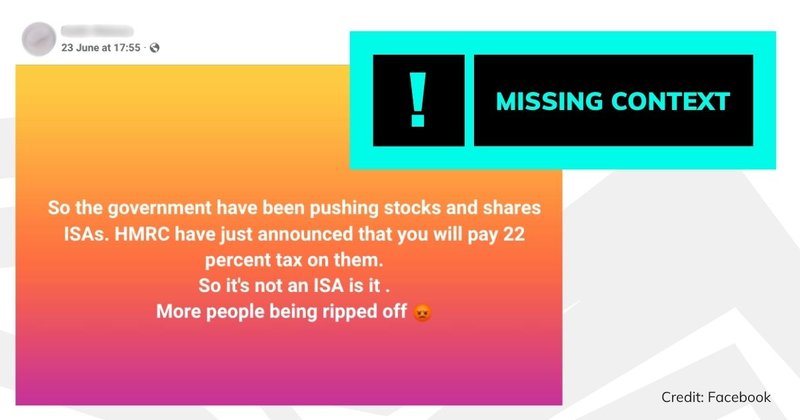
Clarification around new stocks and shares ISA rules released this week have caused some confusion online.
Several posts on social media have claimed that the government is going to “tax Stocks and Shares ISAs at 22%” or that “you will pay 22 percent tax on them”.
These need context.
Although the 22% figure is correct, this charge will only apply to interest (or “alternative finance return”) earned on cash held inside non-cash ISAs (like stocks and shares ISAs).
That rate won’t apply to the actual cash placed in the ISA, and it also won’t apply to investment growth in a stocks and shares ISA either.
A stocks and shares ISA is one of the four types of ISA available and under current rules you do not pay tax on the interest generated from any cash held in them.
Some stocks and shares ISAs allow savers to collect interest on cash held in the ISA even if it isn’t invested in anything, effectively meaning it operates like a cash ISA without being classed as one.
The government says the change to taxing interest on cash held in non-cash ISAs, which will take effect on 6 April 2027, has been made to prevent savers from using these to “circumvent” planned changes to cash ISA allowance limits.
In the 2025 Budget chancellor Rachel Reeves announced that the annual cash ISA allowance each financial year would be reduced from £20,000 to £12,000 for people under the age of 65, in order to encourage more people to invest their savings.
This means that while the overall annual ISA allowance will stay at £20,000 for under 65s, where previously the whole amount could be placed in a cash ISA, from April 2027 only £12,000 can be put in one.
As a result, anyone under 65 wanting to make full use of the £20,000 annual allowance will have to invest at least £8,000 of this amount in non-cash ISAs.