False claims about Covid-19 ‘crisis actor’ recirculate on Facebook

What was claimed
A Covid-19 patient filmed by BBC News is actually a crisis actor.
Our verdict
False. The man in question was genuinely hospitalised with Covid-19, and later added the phrase “crisis actor” to his Instagram profile as a joke.
A video recirculating on Facebook claims a man filmed by the BBC in hospital with Covid-19 is actually an actor pretending to be ill.
This isn’t true. The man in question was genuinely hospitalised with Covid-19, and later said he was a “crisis actor” on social media as a joke.
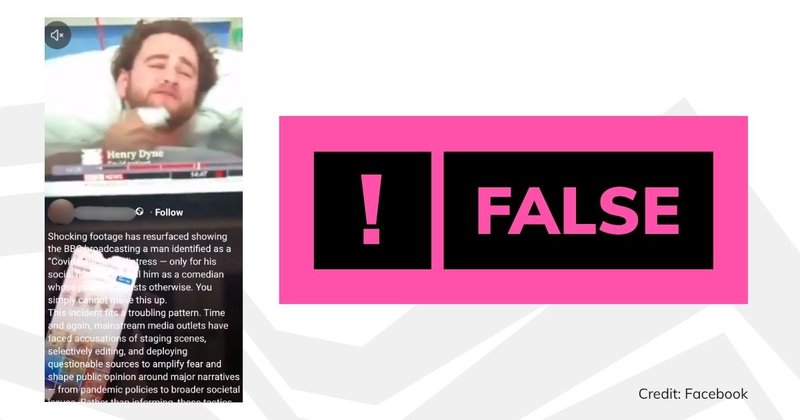
The video shows a TV playing BBC News footage of a man named Henry Dyne lying in a hospital bed. The person recording then pulls up Mr Dyne's Instagram profile on his phone, which he says includes the description: “award winning crisis actor”, and says: “It's almost like he's been paid to pretend he's got Covid and he's on the telly… He's pretending to be real… He's a crisis actor.”
In fact, Mr Dyne has previously confirmed to both Reuters and the BBC that he was genuinely ill with Covid-19 when he appeared on BBC News in 2021, and that he had added the phrase “1x Academy Award Winning Crisis Actor” to his Instagram bio as a joke after receiving abusive messages calling him a crisis actor after his interview first aired.
Join 75,000 newsletter subscribers who trust us to check the facts
Sign up to get weekly updates on politics, immigration, health and more.
Subscribe to weekly email newsletters from Full Fact for updates on politics, immigration, health and more. Our fact checks are free to read but not to produce, so you will also get occasional emails about fundraising and other ways you can help. You can unsubscribe at any time. For more information about how we use your data see our Privacy Policy.
We wrote about this claim back in 2022, and have fact checked various other false claims about people supposedly pretending to be involved in crisis situations.
The idea that people pretend to experience types of crisis or disasters outside dramatised or training situations—so-called crisis actors—is a common feature of conspiracy theories.
This article is part of our work fact checking potentially false pictures, videos and stories on Facebook. You can read more about this—and find out how to report Facebook content—here. For the purposes of that scheme, we’ve rated this claim as false because the man in the video was genuinely hospitalised with Covid-19.
Was this helpful?
Full Fact fights for good, reliable information in the media, online, and in politics.