Makerfield by-election polling: what to look out for
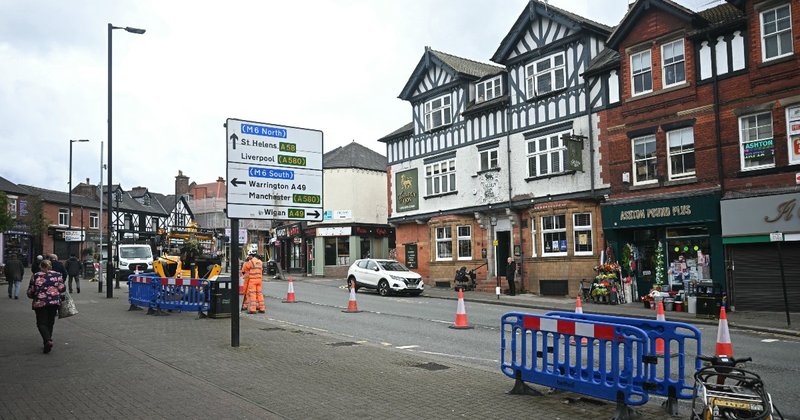
It’s been one of the most closely-watched by-elections in modern British history, and now there are just hours to go until voters head to the ballot boxes in Makerfield.
The by-election has been widely covered as a close-run contest between Labour and Co-operative candidate (and Greater Manchester mayor) Andy Burnham and Reform UK’s candidate (and Wigan councillor) Robert Kenyon. But polls suggesting the right-wing vote may be split between Reform UK and Restore Britain have also gained significant attention in the media.
There have been a number of constituency polls carried out during the by-election campaign, which appear to have been conducted using a reliable methodology—though their findings vary, and of course polling may or may not reflect how people actually vote.
Here we’ve taken a look at what the latest polling shows, as well as a few questionable vote share claims we’ve seen circulating on social media.
Join 75,000 newsletter subscribers who trust us to check the facts
Sign up to get weekly updates on politics, immigration, health and more.
Subscribe to weekly email newsletters from Full Fact for updates on politics, immigration, health and more. Our fact checks are free to read but not to produce, so you will also get occasional emails about fundraising and other ways you can help. You can unsubscribe at any time. For more information about how we use your data see our Privacy Policy.
What do the polls show?
The first of a number of constituency polls, carried out by Survation between 18-22 May, showed a small lead for Mr Burnham over Mr Kenyon, while the second, also carried out by Survation between 26 May-1 June, showed a larger 10-point lead for the Labour and Co-op candidate.
Other polls carried out by Opinium, More in Common and Convergent (a new polling organisation established by former in-house pollsters for Labour) have also all showed leads for Mr Burnham, ranging from five to 12 points.
As one polling expert wrote earlier this week, Mr Burnham therefore “looks to be ahead going into the final days, but an upset can’t be discounted”.
All these polls have been carried out by British Polling Council members, and the methodology used to carry them out appears to be reliable. But, as Survation has noted, the relatively small sample size for these polls (around 500 people were surveyed for each) means any breakdowns within them “should be treated with appropriate caution”.
Last week the i paper also reported on results of “leaked internal polling” for the Labour party which supposedly shows a substantial lead for Mr Burnham. The report contained some details about the poll, including that it was commissioned privately for use by Labour, had a sample group of 1,119 people, and was “weighted by age and gender”.
Because the poll was commissioned for private use and then apparently leaked to a newspaper, full results have not been published (indeed, we don’t even know who conducted the poll), meaning that it’s not possible for us to verify the results.
If the pollster was a member of the British Polling Council (an association of pollsters which promotes transparency) then its rules state: “Organisations conducting privately commissioned surveys have the right to maintain the confidentiality of survey findings. However, in the event the results of a privately commissioned poll are made public as a result of actions by the organisation [its employees or agents] that commissioned the survey, such results will be deemed to have entered the public domain and procedures outlined above will be followed in respect of those findings.”
The rules state full data should be published within two working days of information entering the public domain.
Because the company responsible for the poll hasn’t been publicly identified we’ve not been able to ask whether it has plans to publish the full results—and of course, we can’t say for sure how the i paper obtained the figures. We’ve asked the Labour party about the poll and will update this article if we receive a response.
Unreliable claims
During the by-election campaign we’ve also seen a few questionable claims or predictions about the parties’ likely vote share circulating on social media.
One set of figures we’ve seen, which shows Labour and Reform UK tied on 40% each, appears to have been originally shared by a group called Reformed Media, which claimed it had conducted a poll “on the ground” in Makerfield. The group deleted an X post and website article about the poll shortly after Full Fact got in touch to ask about it, and we’ve not received any response from them at the time of publication. Unless it was conducted using a robust methodology and with proper sample weighting, the poll is unlikely to be reliable.
Other examples of figures we’ve seen circulating include a “prediction” (rather than a poll) shared by GB Politics—an X account that covers political news—which put support for Restore Britain at 19%, far higher than was reported in any of the polls mentioned above.
Meanwhile a Reform UK councillor reportedly deleted a post with “made up” figures suggesting that Labour and Reform were tied at 44%, while even joke ‘polls’ which clearly indicate they are fictional parodies have had thousands of views and prompted some confused comments.
While these kinds of posts and predictions on social media may seem obviously unreliable to many, this isn’t always the case. For example, some of those commenting on the GB Politics “prediction” appeared to believe it was some kind of poll, despite the fact that as GB Politics told Full Fact: “The post states this is a GB Politics prediction in the title.”
What to look out for
When we wrote about polling back in February ahead of the Gorton and Denton by-election, Anthony Wells, head of global politics, elections and polling at YouGov, told Full Fact there were various limitations to things that may be “presented or misrepresented as ‘polling data’ at by-elections”.
Although we’ve seen less evidence of unreliable polling being used by parties during this by-election, and the circumstances in Makerfield are quite different to those in Gorton and Denton, it’s still worth being aware of what to look out for when it comes to questionable claims and predictions.
For example, Mr Wells told us that projections of vote shares in a particular seat based on national polling or MRP modelling (which typically is based on how people would choose to vote in a general election rather than a specific by-election) may not take account of local factors, with by-elections more likely to be influenced by local issues and campaigning. Figures based on canvassing data or responses to local party leaflets are also not the same as polling and are unlikely to be representative.
Was this helpful?
Full Fact fights for good, reliable information in the media, online, and in politics.