Fake AI doctors endorse weight loss patches on social media
16 January 2026
What was claimed
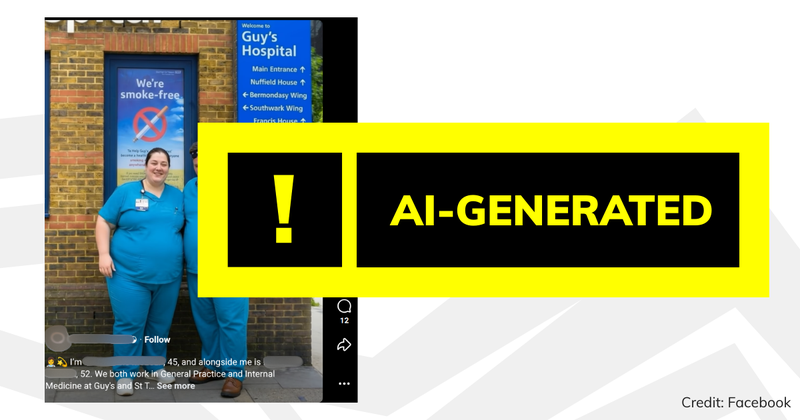
Posts claim to show doctors from Guy’s and St Thomas’ NHS Foundation Trust applying weight loss patches and losing weight over a period of time.
Our verdict
These claims aren’t real and the posts feature videos made using artificial intelligence.
Social media posts that appear to show doctors applying patches then losing weight aren’t real and were made using artificial intelligence (AI).
A spokesperson for Guy’s and St Thomas’ NHS Foundation Trust told Full Fact that the posts are “completely fraudulent”, using fake names and images, and that “there are no clinicians by those names working for the trust”.
Posts like these could lead to people making decisions about their health based on false claims.
The posts, which have been viewed thousands of timeson Facebook, promote patches they claim cause a number of positive effects, including “gradual weight and body composition changes without strict dieting”. We haven’t looked into the validity of those health claims here but the NHS does not recommend ‘weight loss patches’ as a safe or effective treatment for obesity.
One of the videos has been shared with a caption that claims to show a “personal experience from a doctor at St Thomas' Hospital” and another appears to have been filmed outside Guy’s Hospital. They show before and after clips of the supposed doctors losing lots of weight, apparently over a short period of time.
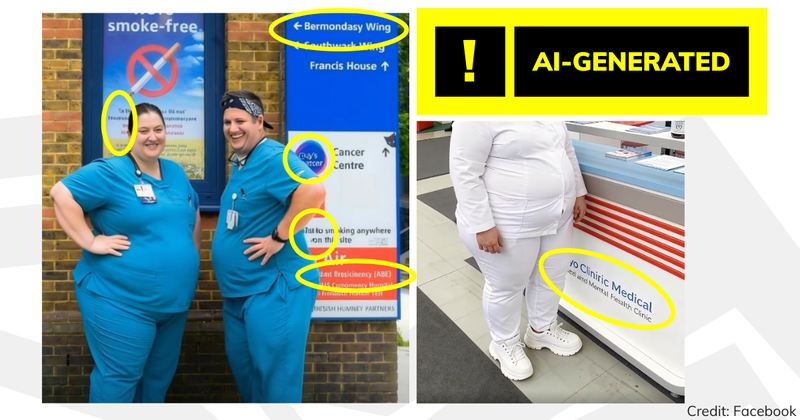
But the videos contain garbled text errors which are typical of AI-generated content. One video misspells the Bermondsey Wing as “Bermondasy” and has an A&E sign that reads “Accident Bresicinency (ABE)”. The text in the ‘we’re smoke-free’ sign behind them changes from legible initially to gibberish three seconds in.
Join 73,000 newsletter subscribers who trust us to check the facts
Sign up to get weekly updates on politics, immigration, health and more.
Subscribe to weekly email newsletters from Full Fact for updates on politics, immigration, health and more.
Our fact checks are free to read but not to produce, so you will also get occasional emails about fundraising
and other ways you can help. You can unsubscribe at any time. For more information about how we use your data
see our Privacy Policy.
How were they made?
When Full Fact put the videos through Google’s large language model (LLM) Gemini it told us one of them had a SynthID digital watermark, indicating it was generated or altered with one of several Google AI products.
SynthID is undetectable with the human eye. Google says the watermark is “designed to stand up to modifications like cropping, adding filters”, though it has also previously said the presence of a watermark can’t tell us whether AI was used to generate brand new content or modify existing work.
According to Gemini, the other video did not contain a SynthID watermark, suggesting it may not have been made with Google AI products (though SynthID can’t always be effectively detected). There are other clues it was made with AI however. The video features the “Mayo Clinic” logo prominently, but the sign underneath features misspellings like “Mayo Cliniric Medical” and “merntal hesalth clinic”.
This article is part of our work fact checking potentially false pictures, videos and stories on Facebook. You can read more about this—and find out how to report Facebook content—here.
For the purposes of that scheme, we’ve rated this claim as false because these posts do not show real Guy's and St Thomas’ NHS Foundation Trust staff promoting weight loss patches, and feature videos made using artificial intelligence.
Bad information ruins lives. It promotes hate, damages people’s health, and hurts democracy. You deserve better.
Subscribe to weekly email newsletters from Full Fact for updates on politics, immigration, health and more.
Our fact checks are free to read but not to produce, so you will also get occasional emails about fundraising
and other ways you can help. You can unsubscribe at any time. For more information about how we use your data
see our Privacy Policy.