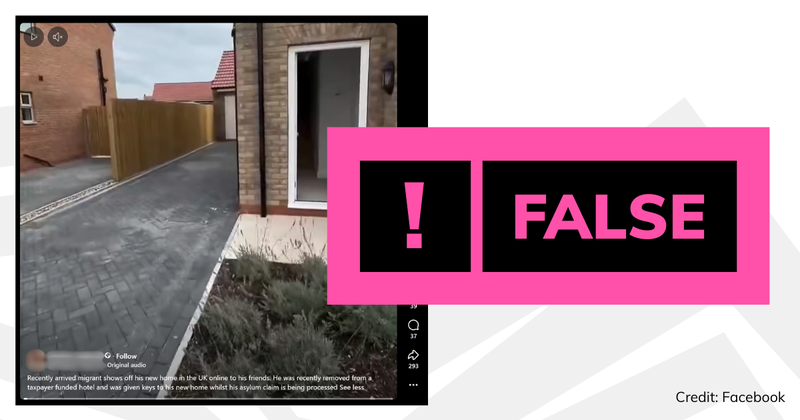
A video has been shared widely online with misleading claims it was filmed by an asylum seeker showing off their home in the UK while their claim is being processed.
The clip, which has more than 800,000 views on X, is captioned: “Recently arrived migrant shows off his new home in the UK online to his friends. He was recently removed from a taxpayer funded hotel and was given keys to his new home whilst his asylum claim is being processed.”
But this is false. The video was originally shared on Instagram in September by an account which is run by a user who describes themself as a “UK Property Investor”.
The caption on the original video describes a property in Beverley near Hull, which is being marketed for £365,000. Narration over the footage describes the different features of the house as someone walks around it. There is no reference to the building being used to house asylum seekers.
This original video also has overlaid text saying “First Time Buyer £36,500” (referring to a 10% deposit), which has been cropped out of the version now being shared with misleading claims. The first shot in the original clip, showing a “FOR SALE” sign in a window at the front of the house, is also not included in the viral version.
The creator responded to the claims the video depicts a migrant showing off their new home in posts where they said they had been “showcasing a new-build house which is not completed” and there was “no substance” to the claims that they were a “recently arrived migrant” or removed from a “taxpayer funded hotel”.
“I am not seeking asylum neither am I in receipt of any public funds,” they added.
“I am a property investor and mentor, I have supported the community by providing essential housing to those who are looking for property to rent and I pay my taxes.”
The Companies House listing for the creator’s real estate business lists their nationality as British. Their social media accounts regularly share videos of property tours.
Before sharing content like this which you may see on social media, first consider whether it comes from a reliable and verifiable source. Our Full Fact toolkit can help you identify bad information which you may encounter online.