‘Photo from Artemis II’ of moon crater with Earth in background is fake
10 April 2026
What was claimed
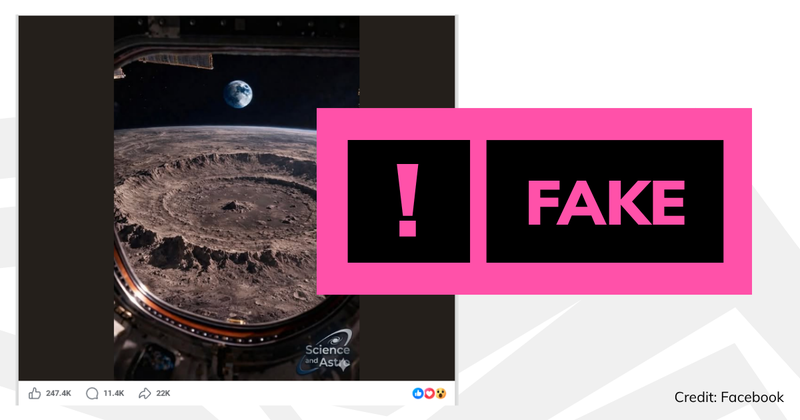
An image showing the moon's Orientale Basin with the Earth in the background was photographed by astronauts aboard the Orion spacecraft during the Artemis II mission.
Our verdict
The image is fake and almost certainly generated by artificial intelligence. It features a Gemini AI watermark and doesn’t match the geographical features seen in real photos of the impact crater.
An image appearing to show a huge crater on the moon with the Earth in the background is being shared with claims it was photographed as part of the Artemis II mission.
But this widely-shared image is fake, and has almost certainly been generated with artificial intelligence.
The picture, which has gained thousands of interactions across Facebook, at first appears to have been taken from a window in the Orion spacecraft.
Captions on posts sharing the image claim that it depicts the “Orientale Basin”, adding: “For the first time in human history, the full scale of the moon’s Orientale Basin has been witnessed by human eyes. Astronauts aboard the Artemis II mission captured this breathtaking view from the Orion spacecraft, marking a monumental milestone in deep-space exploration.”
It is correct that the crew aboard the Artemis II lunar fly-by mission was able to photograph the Orientale Basin, a nearly 600-mile-wide impact crater that straddles the moon’s near and far sides. According to NASA, the Orion crew “are the first people to ever see the full” basin.
Join 73,000 newsletter subscribers who trust us to check the facts
Sign up to get weekly updates on politics, immigration, health and more.
Subscribe to weekly email newsletters from Full Fact for updates on politics, immigration, health and more.
Our fact checks are free to read but not to produce, so you will also get occasional emails about fundraising
and other ways you can help. You can unsubscribe at any time. For more information about how we use your data
see our Privacy Policy.
But this image being circulated on social media is not a real photograph from the mission.
There are a number of clues that show it to be fake, and almost certainly generated by artificial intelligence.
Most of the examples being shared include overlaid text in the bottom-right corner saying “Science and Astro”, indicating they got it from a pagewith that name, which shared the image on 6 April in a post which gained over 23,000 shares.
But that page’s version clearly includes the diamond Gemini watermark, a strong indicator that it was made with Google’s AI tools.
The account also posted a comment on a very similar image it shared appearing to show the Orientale Basin with the Earth in the background, stating that the picture was “just updated using AI but is originally taken by NASA, the world is still the real as in the original images, just edited to avoid copyrights [sic]”.
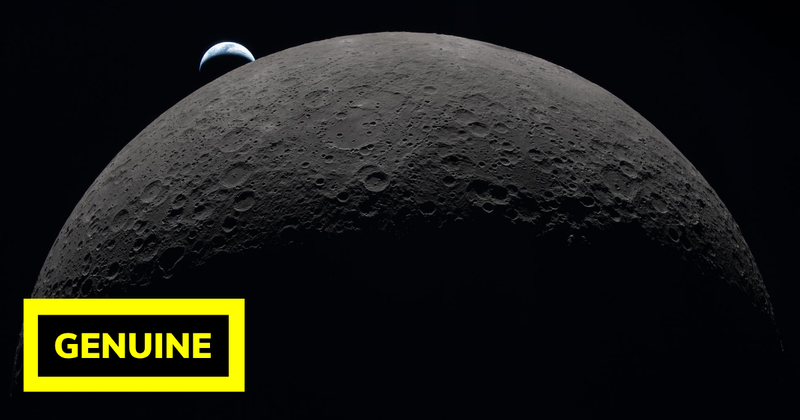
There are genuine photos from NASA showing the moon’s surface with the Earth in the background taken by Artemis II, but these don’t resemble the one we’ve checked here.
A NASA computer modelled image of the terrain of the basin in high relief also shows clear differences with the picture being shared.
We have also fact checked another fake image purporting to have been taken on the Artemis II mission which has been gaining traction on social media.
Before sharing content like this that you see online, it’s important to consider whether it comes from a trustworthy and verifiable source. Our toolkit contains guides on how to check whether images might be misleading, such as tips on how to do reverse image searches.
This article is part of our work fact checking potentially false pictures, videos and stories on Facebook. You can read more about this—and find out how to report Facebook content—here.
For the purposes of that scheme, we’ve rated this claim as altered because this isn’t a genuine photo of the moon’s Orientale Basin taken by the Artemis II crew.
Bad information ruins lives. It promotes hate, damages people’s health, and hurts democracy. You deserve better.
Subscribe to weekly email newsletters from Full Fact for updates on politics, immigration, health and more.
Our fact checks are free to read but not to produce, so you will also get occasional emails about fundraising
and other ways you can help. You can unsubscribe at any time. For more information about how we use your data
see our Privacy Policy.