New wave of fake stories about curbs on personal freedoms and bogus taxes rack up millions of views on social media
Videos making false claims about government curbs on personal freedoms, bogus taxes and fines and even fictional spats between the Royal Family and politicians are still spreading widely on social media, three months after a Full Fact investigation exposed the problem.
Since late September we’ve fact checked at least 45 new claims in this format, ranging from supposed government plans for nighttime curfews to false claims about “NHS access cards” and even a £500 “Christmas decoration tax”.
While such claims may sound obviously false to some, Full Fact has found that these videos have been viewed millions of times and are being shared widely across different social media platforms.
Accounts sharing these claims are regularly deleted, so we’ve not been able to produce a reliable estimate of their total reach. But our analysis of just four Facebook pages and four TikTok accounts we’ve found sharing these claims reveals that the dozens of misleading videos they have posted have racked up more than 8.4 million views between them, many since our investigation in September.
We’ve identified at least 163,000 shares of the 45 new claims we’ve fact checked, though this is based only on a sample of the accounts sharing the claims and the true total is likely to be much higher.
After we got in touch with TikTok about the four accounts sharing such videos on its platform which we analysed, it told us all had been removed for violating its Community Guidelines on harmfully misleading AI-generated content.
Join 72,953 people who trust us to check the facts
Sign up to get weekly updates on politics, immigration, health and more.
Subscribe to weekly email newsletters from Full Fact for updates on politics, immigration, health and more. Our fact checks are free to read but not to produce, so you will also get occasional emails about fundraising and other ways you can help. You can unsubscribe at any time. For more information about how we use your data see our Privacy Policy.
Fake audio
The claims we’ve seen have been shared across multiple accounts and social media platforms, and sometimes in different formats, so it’s unclear to what extent they are linked. But many of the videos that are part of this trend appear to follow a similar pattern.
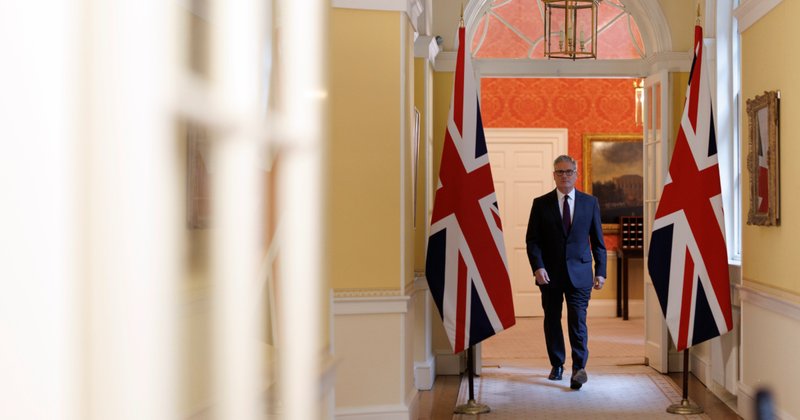
Often they begin with a clip of the Prime Minister, Sir Keir Starmer, accompanied by a voice that resembles him announcing a supposed new government policy starting in the coming month.
These policies often involve limiting people’s personal freedoms, such as a 48-hour limit on parking in front of your own house, or measures that will negatively affect people’s finances in some way—for instance, false claims that savings above £5,000 are being taken to pay off the national debt. Some videos also announce fake policies that will supposedly give people more money, such as those claiming the Christmas Bonus is going up from £10 to £200 (it isn’t).
The voice does not usually match the lip movements of Mr Starmer in the clip. This is because the video clips used tend to be taken from the Prime Minister’s old press conferences, and little effort has been made to artificially sync his mouth movements to the fake audio being played over the top.
We strongly suspect that the audio accompanying these videos has been made using artificial intelligence (AI). The voice doesn’t consistently match the natural cadence or intonations of Mr Starmer’s actual voice, and there are often unusual turns of phrase which suggest a text-to-speech tool was used to create the voice. (It is also possible, though less likely, that the audio has been created another way, for example by an impersonator).
Some recent videos also include an overlaid text disclaimer saying “generated by AI”, added by the creator of the video, rather than the social media platform. But comments on the posts, and the fact that the sample of these videos we’ve specifically fact checked have been shared so widely, suggests that a significant number of people believe they are true.
Other videos we’ve seen in recent months impersonate news presenters describing these fake new policies, or even purport to show King Charles discussing political instability. These fake clips of the King are posted by the same accounts that post the videos of Mr Starmer, under names like “Latest.News.Hub” and “uk.news.headlines8”.
Why are these videos being posted?
As we wrote previously, we can’t be sure why these videos have been created, or why they were originally shared. But we suspect it may be so their creators can benefit from various platforms’ monetisation programmes, which reward users for driving engagement online, and have been linked in the past to a rise in so-called ‘rage bait’—content which is designed to anger and outrage.
According to TikTok, creators can make money on the platform via its Creator Rewards Program if they have at least 10,000 followers, which the four accounts we analysed appear to have had, and at least 100,000 video views in the last 30 days. (There are also some further eligibility criteria around location, a lack of terms violations and account type).
Meta similarly allows Facebook pages to make money from advert revenue if they meet Facebook's Partner Monetisation and Content Monetisation policies. Meta says “creators, publishers and third-party providers posting content flagged as misinformation and false news may be ineligible or may lose their eligibility to monetize”. It also says “content that has been rated false by a third-party fact checker” (which is what we at Full Fact are doing) is “ineligible to monetize”.
It’s not clear if the accounts we analysed have been monetising the videos, or were part of TikTok’s Creator Rewards Program or eligible to earn money on Facebook—neither TikTok nor Meta clarified this when we asked. And it’s also possible that at least some of the claims, though false, may have been shared in good faith.
We attempted to contact the four Facebook accounts we analysed about the content they have been sharing but did not get a response. We were not able to contact the four TikTok accounts before they were removed by the platform.
According to TikTok, when it is made aware of a synthetic video or audio clip that is spreading online and violates its policies, it creates detection rules to automatically catch and take action on similar versions of that content. The social media giant said it also employs other tactics, like keyword sweeps.
Meta referred us to a blog post on how it labels AI-generated content on its platforms. We have rated a number of the Facebook posts we discuss here as part of our work on the company’s Third-Party Fact Checking Programme.
Full disclosure: Full Fact receives funding from Meta for its work on the Third-Party Fact Checking Programme. You can see more details about the funding Full Fact receives here. We are editorially independent and our funders have no editorial control over our content.