From AI videos to dodgy bar charts: what we learned from the 2026 elections
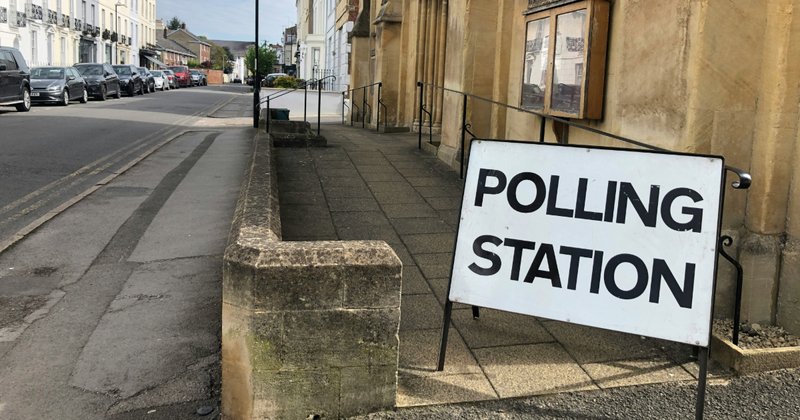
Over the last five weeks, Full Fact has been prioritising fact checking the May elections. We’ve written over 15 fact checks, crowdsourced claims and used our AI tools to monitor media and social media at scale. And now, as voters in Scotland, Wales and many parts of England prepare to head for the polls, there’s a little time to reflect: what have we learned?
Some of what we’ve seen has felt genuinely new. One clear lesson is that AI imagery is no longer a hypothetical factor in UK elections—it’s being used, and in increasingly complicated, sometimes surprising ways.
Join 75,000 newsletter subscribers who trust us to check the facts
Sign up to get weekly updates on politics, immigration, health and more.
Subscribe to weekly email newsletters from Full Fact for updates on politics, immigration, health and more. Our fact checks are free to read but not to produce, so you will also get occasional emails about fundraising and other ways you can help. You can unsubscribe at any time. For more information about how we use your data see our Privacy Policy.
We saw this on social media—AI tools were used to create a fake image of the Reform UK MP Sarah Pochin, and a fake video supposedly showing voters in the street saying they would vote for Reform and Restore.
But we also saw it from politicians themselves. An independent candidate standing in the Scottish parliamentary elections for the Glasgow Southside constituency shared two AI-generated videos of himself supposedly meeting voters, speaking at rallies and visiting a school which were labelled as “illustrative”—he told us the events shown in the footage were “not real”.
And while the SNP didn’t directly confirm whether it used AI when it edited a picture of John Swinney to make a billboard behind him clearer, distortions in the edited version caused confusion online. Some social media users questioned the veracity of the image—even though it did indeed show a real event.
Social media users have questioned whether an image shared on social media by SNP leader John Swinney was made with AI.
— Full Fact (@FullFact) May 5, 2026
It is a photo of a real event. But the SNP told us it was “edited quickly” to lighten a billboard.https://t.co/14ohK1cnnh pic.twitter.com/XpVLKgUiLf
What’s striking about these examples is that they weren’t all the same kind of problem. Yes, in some cases AI is being used to create entirely fabricated imagery which is being passed off as if it is real. But it is also being used illustratively, prompting questions over how prominent labelling should be. And minor editing of photos—whether with AI or not—is leading to confusion over whether genuine images have in fact been totally faked. The challenge for fact checkers is no longer just spotting outright fakes—the lines between what’s real and what’s not are blurring.
At the same time, much of what we’ve covered in the last few weeks was reassuringly old school.
Our biggest investigation of the campaign focused not on deepfakes or AI, but on a phenomenon we’ve been writing about for well over a decade—misleading bar charts in local election leaflets.
Our report, which appeared on the front page of the Guardian, found more than a dozen examples of leaflets making claims about how people are likely to vote which were misleading, unsourced or not backed with reliable evidence. There is, of course, absolutely nothing wrong with parties making a case to voters, and when it comes to the local elections in particular, good data is sometimes just not available. But it was disappointing to find that all too often parties are making overblown or dodgy claims in leaflets based on cherrypicked, misleading or unreliable data.
Finally, one lesson from this election campaign was simply the scale of the challenge.
With local elections across much of England, the parliamentary elections in Scotland and Wales and thousands of candidates standing, there was a lot to keep tabs on. So this campaign pushed us to experiment with new ways of monitoring what voters were actually seeing.
That included using Full Fact’s AI tools to monitor claims made on social media by many of the candidates, based on accounts listed by our friends at Democracy Club. This helped us spot claims we might not otherwise have seen, such as an incorrect statistic from a Plaid Cymru Senedd candidate about youth unemployment, which the party deleted following our fact check.
It also meant relying on our readers to alert us, through our elections tip line, to claims they had seen locally. For example, a number of readers sent us examples of Reform claims about council tax which we included in our analysis of what the party did, and didn’t, promise on the topic.
As the polls open, the noise from the 2026 election campaign will soon fade. But some of the questions it’s raised—around AI, transparency, and the challenges of monitoring an ever-expanding information environment—are ones that we’ll be continuing to work on.
Was this helpful?
Full Fact fights for good, reliable information in the media, online, and in politics.